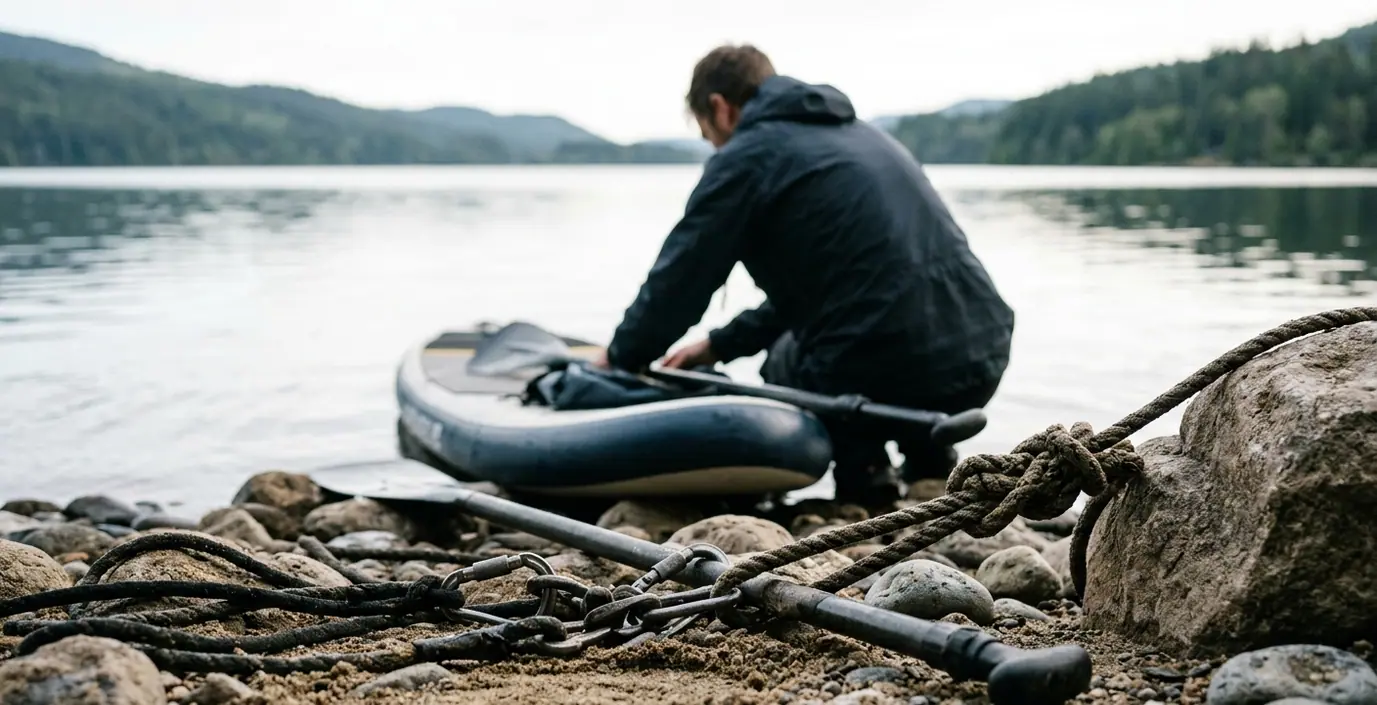
A quick-release, angle-controlled setup holds a fishing SUP more safely than extra anchor weight ever will. Secure positioning depends entirely on the direction of wind or current, the board's attachment point, bottom composition, and the ability to release the system immediately. The environments covered here include recreational lakes, slow open river reaches, and tidal flats. Surf zones, severe weather, swift or obstructed currents, and navigation channels require entirely different risk management strategies.
In this Article
- Assessing Force and Establishing Board Control
- Scanning the Swing Sector and Identifying Hazards
- Matching the Positioning Tool to the Bottom Composition
- Routing the Trolley and Quick Release Load Path
- Managing Wind Drift and Swing Arcs on Open Water
- Evaluating Moving Water and Downstream Exposures
- Anticipating Flow Reversals on Coastal Flats
- Executing a Clean Retrieval or Safe Disconnect
Assessing Force and Establishing Board Control
Effective anchoring begins with a strict control hierarchy. You must assess the primary force acting on the SUP, select a suitable bottom tool, move the effective pull point toward an end of the board, and preserve an immediate way to disconnect. The load path requires a bottom tool, contained rode, trolley ring, verified hard point, reachable release, and recovery marker. Skipping any of these elements compromises the stability of the hull under tension.
Wind and current exert continuous pressure against the rails and top deck of a paddleboard. When you attach a fixed line to the center of the board, that pressure creates a pivot point. The board turns broadside to the dominant force. Leverage increases dramatically in this broadside orientation, amplifying instability and making the deck highly susceptible to swamping from small waves or boat wakes.
Moving the attachment point to the extreme bow or stern aligns the length of the board with the incoming force. The hull slices through the water or wind rather than acting as a sail or a dam. This alignment reduces the total load on the anchor system and keeps the primary standing area stable. The environments suitable for this technique remain limited to recreational lakes, slow open river reaches, and tidal flats.
Scanning the Swing Sector and Identifying Hazards
A paddler preparing to drop an anchor near a submerged timber pile must complete a full visual sweep before the hardware ever leaves the deck. You identify the dominant wind or current, trace the board's likely swing path, and locate the shoreward exit. You then check that exact path for approaching boat traffic, strainers, submerged timber, rocks, and fishing-line hazards. Kneel on the deck before opening the line container. Place the release mechanism exactly where it can be operated from that kneeling position without stepping over gear.
This specific sequence illustrates the broader principle of swing sector management. The scan must cover the complete swing sector from the anchor direction through the board's expected downwind or downstream position. Checking only the water immediately beside the SUP leaves you blind to obstacles that will enter your path as the board settles on its rode. The board will travel in an arc determined by the length of the deployed line and the shifting forces of wind and water.
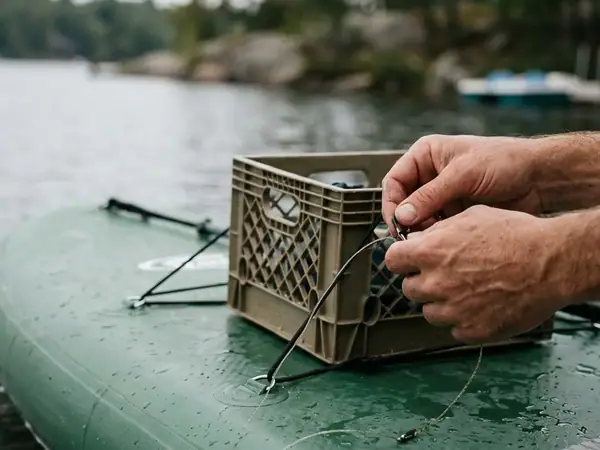
Failing to manage this sector introduces severe entanglement and capsize hazards. Keep every loose coil inside a reel, spool, or line bag. The working rode must travel directly from storage to the release and trolley ring without crossing your feet, hooks, the paddle, or a crate. An anchor line that cannot be released under tension turns a minor snag into a critical emergency.
Pre-Deployment Safety Checks
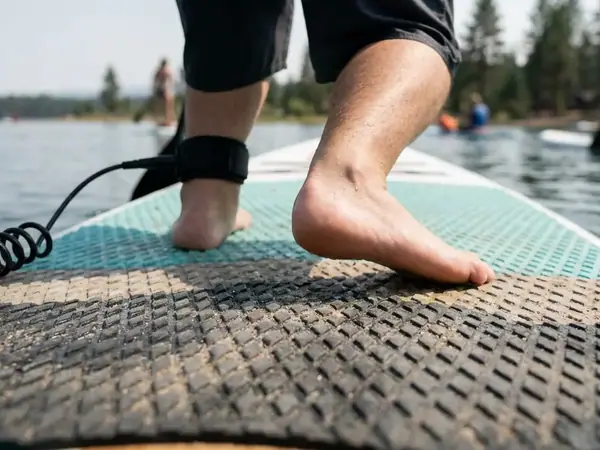
Wear suitable personal flotation, choose a leash for the specific environment and local guidance, and know how you will separate from the anchor and self-rescue before deployment.
Matching the Positioning Tool to the Bottom Composition
How do you select the right holding device when bottom conditions vary wildly across a single body of water? Start with the positioning goal rather than an assumed anchor style. You must choose between fixed holding for repeated casts at one target, drag control for covering a shoreline or contour, or shallow-water pinning for brief stops. Screen that choice against bottom penetration, snag exposure, water movement, and the storage space available on the SUP.
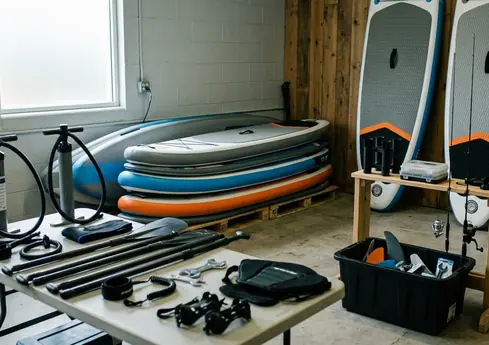
A folding grapnel anchor stores compactly on a crowded deck. Its open flukes engage well around firm or uneven bottoms. Those same flukes easily lock beneath roots, broken rock, submerged cable, or heavy branches. A grapnel requires careful site assessment and should never be treated as an all-bottom solution. Fluke-style anchors depend on suitable sand or mud and a low pull angle to dig into the substrate. Mushroom-style or compact weighted anchors rely heavily on embedment, suction, or friction in modest conditions.
Alternative tools offer solutions when fixed anchoring proves inefficient. A drift sock remains attached to the moving board and reduces drift speed, allowing you to fish a contour line effectively. A stake-out pole pins the board only where the pole can penetrate a shallow bottom. Before purchase or installation, verify the tool's stated use, connector compatibility, attachment-point rating, packed dimensions, and any restrictions listed in the board documentation.
Routing the Trolley and Quick Release Load Path
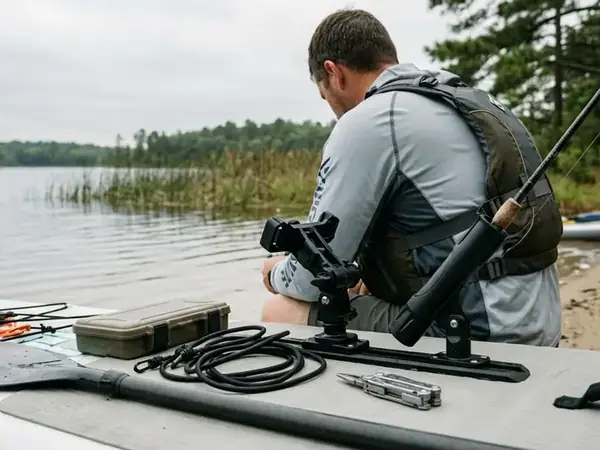
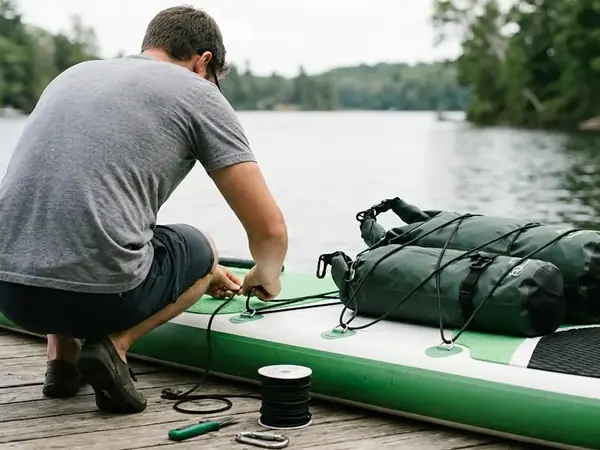
You must rig the anchor trolley and the quick release as a single, continuous load path. Inspect the board's intended hard points and trolley hardware first. Route the trolley outside rod holders and deck bungees. Pass or connect the rode at the working ring as the chosen design requires. Insert a release that remains reachable under load, contain the spare rode, and trace the entire path by hand before launching.
The working system consists of the anchor or drag device, suitable rode, dedicated line storage, trolley ring, low-friction guides or pulleys, rated board attachment points, an operable quick release, and a conspicuous recovery float where retrieval is safe and lawful. Cargo bungees, paddle clips, carry handles, D-rings intended only for light gear, and leash fittings fail under sustained lateral loads. They are completely incompatible with verified anchor attachment points.
Perform a dry-land check by pulling along the board's centerline and from each side while watching every guide, knot, connector, and attachment patch. Stop immediately if hardware twists, a line crosses deck gear, or the release becomes shielded. Follow the shore test with a shallow, calm-water release check while kneeling. Confirm that the board separates from the rode without reaching across a rail and that the recovery float remains with the released line. Additional rode lowers the pull angle on a conventional anchor, improving its hold. Line beyond what the site requires increases the SUP's swing radius and leaves more material to manage on deck.
Managing Wind Drift and Swing Arcs on Open Water
An angler targeting a weed edge on a large lake observes the SUP drifting freely before choosing the drop point. The board's direction under wind load often differs significantly from the apparent movement of surface ripples. You move upwind of the casting target, deploy outside the target itself, let the board settle through its initial swing, and make small trolley movements until the preferred casting side faces the structure.
This approach highlights the necessity of incremental adjustments. Move the trolley a short section at a time and wait for the board to settle after each adjustment. Shifting directly from one end stop to the other produces an abrupt turn around a loaded rode, destabilizing the deck. Keep the entire anticipated swing sector clear of docks, swimmers, moored boats, other anglers, and marked traffic routes rather than checking only the final resting position.
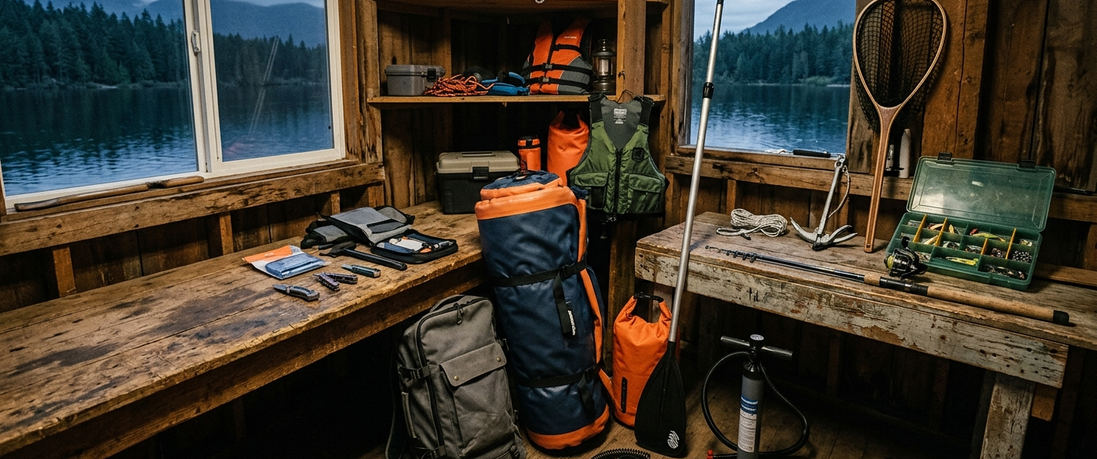
Choose a drift sock when the fishing plan calls for repeated casts while moving along a contour. Lifting and resetting a fixed anchor interrupts every short drift and consumes valuable fishing time. Retrieve your gear before whitecaps begin washing the working side of the deck. Pull the anchor when gusts repeatedly snap the rode tight or a wind shift sends the swing arc toward an obstruction.
Evaluating Moving Water and Downstream Exposures
What happens when a paddleboard is tethered in a river current? Treat the decision to anchor as reversible until the final moment. Identify an open downstream escape route, kneel, place the effective pull at the upstream bow, and keep the release in the paddler's working hand zone. If the load increases unexpectedly, stop fishing, secure or abandon the rod as necessary, release the anchor system, and paddle clear before considering recovery of marked gear.
A caught anchor holds the board stationary while the current continues loading the hull. Water piles up against the nose or rails. A side attachment pulls a rail down instantly. A stern-first hold leaves the paddler facing away from downstream hazards, unable to react to approaching debris. Do not deploy beside strainers, bridge piers, ledges, standing waves, blind bends, submerged fences, or busy channels, even when the immediate patch of water appears smooth.
A drift sock adds drag without removing downstream exposure and offers no remedy for current that is too strong or obstructed. Reserve a stake-out pole for penetrable shallow margins or genuine slack water. Never hold a loaded rode by wrapping it around a hand, wrist, leg, paddle shaft, or deck fitting. Fixed river anchoring in this guide is confined to slow, open water with a visible downstream escape; river classifications, release methods, leash choices, and rescue practices require local instruction where flow or obstacles create moving-water consequences.
Anticipating Flow Reversals on Coastal Flats
Tidal flats demand a strategy built around direction changes, exposed mud, and draining channels. Plan the stop backward from the exit route. Identify the draining channels and crossings needed for the return, determine the expected flow direction at the fishing position, and choose between a stake-out pole, fixed anchor, or drift sock. An anchor position selected on one stage of the tide frequently orients the SUP poorly after the flow slackens or reverses.
Use a stake-out pole for a short, quiet stop where the bottom is shallow and penetrable. Deploy a suitable anchor for a longer hold. Utilize a drift sock only when controlled movement across open water is the objective. Keep the possible swing clear of oyster beds, exposed stakes, mooring hardware, channel traffic, and banks that may become mudbound as water falls. Published tide times describe predicted stages, not the exact force at the board. Wind, runoff, narrow channels, bottom contours, and local access rules change the usable window.
Tidal Flow Adjustments
Recheck the setup when the board stops pulling consistently, begins swinging across the rode, or points in a new direction as slack water approaches.
Before concentrating on fishing, confirm three items from the kneeling position. The rode must be clear of all gear. The release must be reachable without stretching. The route back to navigable water must remain open and deep enough for the fins.
Executing a Clean Retrieval or Safe Disconnect
An angler preparing to move to a new spot ends the fishing task completely before beginning retrieval. You secure hooks and loose tackle, kneel on the deck, and move the trolley pull point to the position that allows a centerline recovery. You take in the rode directly into its container, keeping the line under light control as it enters the reel, spool, or bag so a wet coil cannot spread across the standing area. Finally, you lift the anchor without leaning beyond the rail.
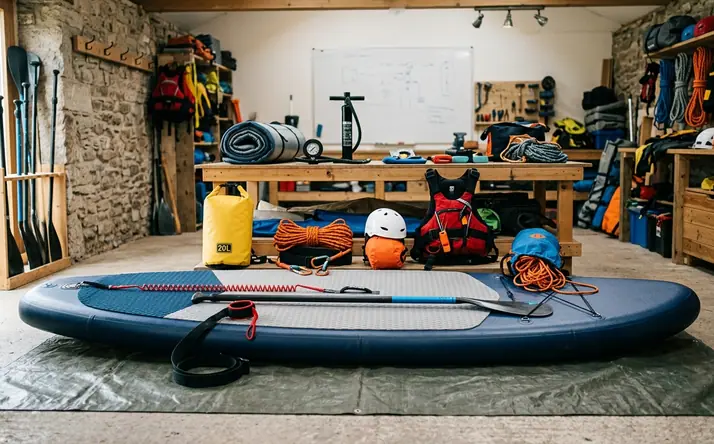
This disciplined sequence prevents the most common anchoring accidents. If the anchor remains stuck, remove tension and change the approach angle only when the SUP can be repositioned without entering traffic, current, or a hazard zone. A recovery float marks the disconnected rode and permits later retrieval from safer conditions. It does not justify remaining attached to a load that is pulling the SUP toward danger.
The pre-launch check establishes the foundation for a safe retrieval. You need verified fittings, an unobstructed trolley, contained rode, a functioning release, a bottom-appropriate tool, a reachable cutting tool, personal flotation, a suitable leash decision, checked weather, clear traffic, and an open escape route. The release boundary remains absolute: establish no fixed hold where a kneeling paddler must cross the deck or reach over a loaded rail to disconnect. If the anchor jams while wind or current builds, can you release it immediately without reaching across the board?