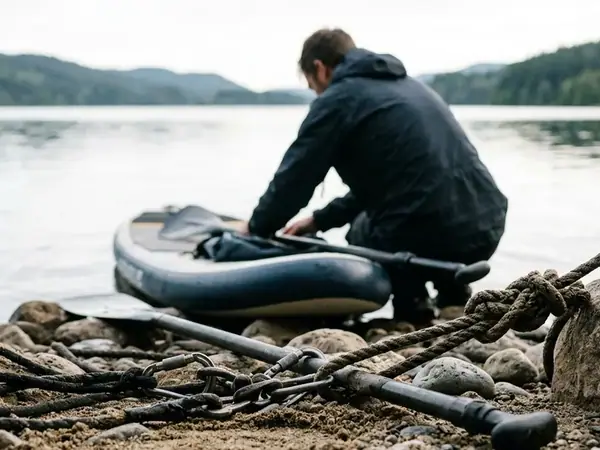
In this Article
- What Makes a SUP Accessory Essential?
- Criteria for Selection: How These Accessories Made the List
- Safety Accessories You Should Treat as Core Gear
- Control and Setup Accessories That Make the Board Work Properly
- Storage and Transport Accessories for Real-World Paddling Days
- Repair, Fishing, and Trip-Specific Accessories Worth Adding Next
- Scope, Limitations, and What to Buy First
- Final Priority Checklist
What Makes a SUP Accessory Essential?
An essential SUP accessory solves a problem that can stop the trip, make self-rescue harder, or leave a paddler without basic control of the board. Comfort gear has its place. A cup holder, deck chair, or speaker might make a slow cove paddle more pleasant, but it does not belong in the same category as a PFD, leash, pump gauge, fin screw, or dry bag.
That distinction matters most with inflatable SUPs. An iSUP owner depends on several removable parts before every launch: pump hose, pressure gauge, valve cap, fin, fin plate or screw if the system uses one, paddle sections, leash, and dry storage. Leave one small piece on the garage floor and the board may be fully inflated but still unusable.
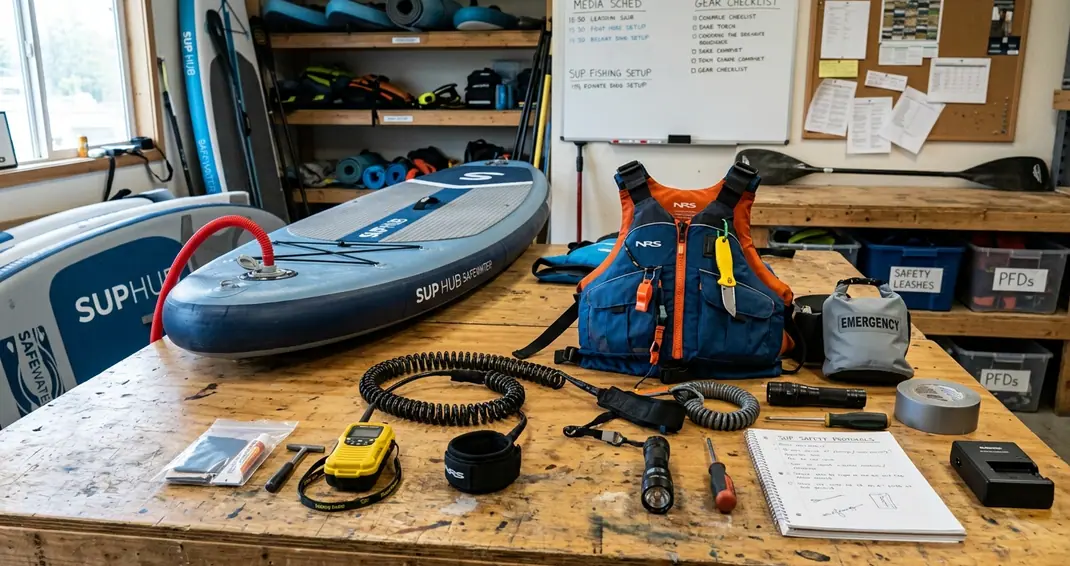
This list is written for recreational paddlers, travelers, beginners, and SUP anglers. It is not a whitewater packing list, a cold-water expedition checklist, or a surf-zone training plan. The focus is the kind of paddling day where a board comes out of a bag, gets inflated near the car, and needs to be safe, manageable, and simple to repack.
Criteria for Selection: How These Accessories Made the List
What earns space in a SUP bag when the paddler already has a board and paddle?
The answer is less about popularity than consequence. Each accessory here is judged against six practical criteria: safety relevance, frequency of use, compatibility with inflatable boards, packing efficiency, failure prevention, and value across recreational paddling, travel, beginner use, and SUP fishing. A compact item that prevents a launch from being cancelled often beats a bulky accessory that only helps in one narrow scenario.
This article does not rank products or brands. It explains what the accessory does, where it fits in the kit, and what to check before trusting it on the water.
Recommendation: Before buying another add-on, ask four blunt questions: Does it keep the paddler attached to the board? Does it help satisfy local boating requirements? Does it keep keys, phone, layers, or first-aid items dry? Does it prevent a small setup problem from ending the session before launch?
A practical pre-launch check for an iSUP can often be done in 10 to 15 minutes when the board is already unpacked. It takes longer the first time because the paddler is not just checking gear; they are learning where every screw, strap, cap, and clip belongs.
Safety Accessories You Should Treat as Core Gear
Safety accessories come first because they address the highest-consequence problems: fatigue, cold shock, wind drift, boat traffic, poor visibility, and separation from the board. None of these items make a paddler invincible. They buy time, visibility, buoyancy, or reach when the day stops going neatly.
1. Personal Flotation Device
A PFD adds buoyancy when fatigue, cold water, wind, current, or injury makes self-rescue slower. According to U.S. Coast Guard life jacket guidance, paddlers should use a properly fitted, approved life jacket and check state or local requirements.
Rules vary by location and paddling zone, so the field note is simple: do not treat the PFD as decoration under the deck bungees if conditions make wearing it the safer choice.
2. Leash
The leash keeps the board within reach after a fall. On open flatwater, that board is often the largest flotation platform a paddler has, and wind can move it faster than a tired swimmer expects.
Leash choice depends on water type. A coiled ankle leash commonly suits calm flatwater because it stays off the deck and reduces drag. Moving water can require a quick-release waist system and instruction from someone who knows the local hazards. The difference is not gear fashion; it is entrapment risk versus board separation risk.
3. Whistle or Audible Signaling Device
A whistle works when voice range disappears in wind, distance, or motorboat noise. Attach it to the PFD shoulder strap or zipper pull, not inside a dry bag. After a fall, one-hand access matters.
4. Waterproof Light or Visibility Marker
Pack a waterproof light or visibility marker for dawn starts, dusk returns, fog, shaded coves, or any trip that could run 30 to 60 minutes later than planned. The item is small, and the use case is common enough: a slow headwind return, a friend taking longer than expected, or a shoreline that looks closer than it paddles.
Control and Setup Accessories That Make the Board Work Properly
The classic cancelled launch is not dramatic. The board is inflated, the paddler is dressed, the weather looks good, and then the fin screw or fin-box plate is missing. The session ends in the parking lot because one small part controlled the whole system.
That is why setup accessories belong beside safety gear, not buried in the nice-to-have pile.
5. Pump with Pressure Gauge
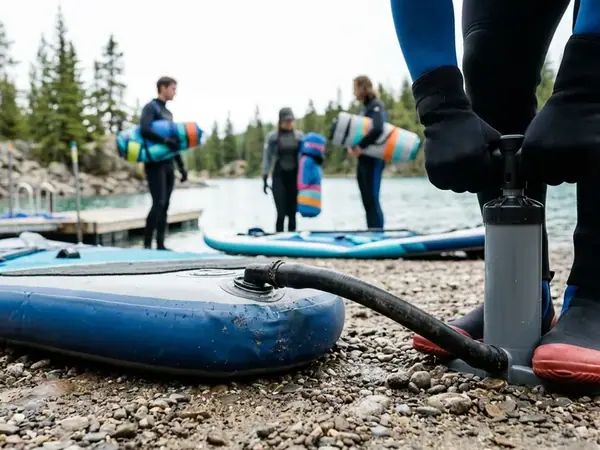
The pump does more than inflate the board. The gauge helps the paddler reach the board maker’s recommended pressure range, usually printed near the valve or listed in the manual. An under-inflated iSUP can flex through the standing area and lose tracking, especially under a heavier paddler or loaded deck.
In practice, a working gauge also gives the paddler a repeatable setup. Guessing by hand pressure may feel close on shore, then feel soft once the board is moving through chop.
6. Fin and Fin Hardware
The fin influences tracking, turning behavior, and shallow-water clearance. A long center fin helps many recreational boards hold a line, while a shorter river-style fin may clear weeds or sandbars better. The board’s fin box determines what is possible.
Hardware deserves the same attention as the fin itself. A single missing screw, plate, lever pin, or damaged fin-box edge can stop a launch even when the board, paddle, and pump are ready.
7. Paddle Adjustment and Spare Hardware
Paddle length affects posture, cadence, and shoulder comfort. If the paddle is too short, the paddler often hunches. If it is too long, the top arm and shoulder may work harder than needed.
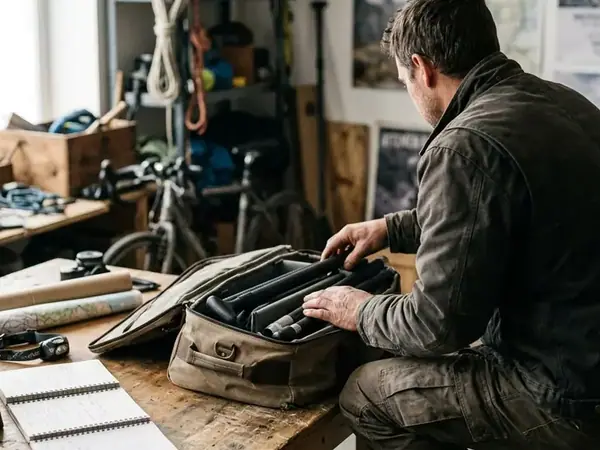
For adjustable travel paddles, confirm that the clamp closes firmly, the alignment mark is visible, and any replaceable clamp screw or simple tool is packed with the pump or repair pouch. An at-home setup check can be short: inflate the board briefly, install the fin, set the paddle, check the valve cap, and confirm the fin screw or locking tab before loading the car. Once the kit is familiar, that check usually takes 8 to 12 minutes.
Storage and Transport Accessories for Real-World Paddling Days
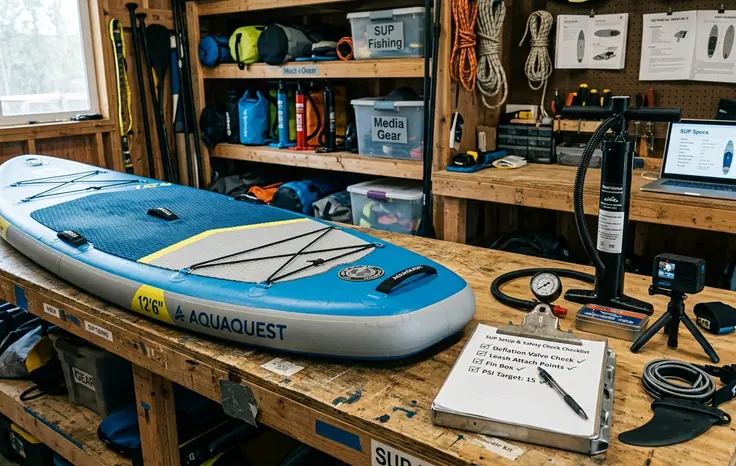
Storage and transport gear earns its place because paddling days involve parking lots, gravel paths, wet layers, keys, phones, snacks, and wind at the shoreline. The board may paddle beautifully and still be awkward to move, load, or balance with cargo.
8. Dry Bag
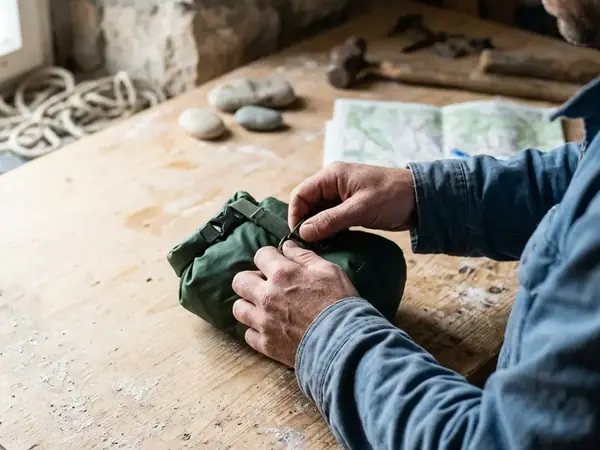
A dry bag protects keys, phone, layers, snacks, and first-aid items from splash, rain, and accidental deck wash. The closure technique matters more than the label on the outside. Press excess air out, align the stiff top edge, roll it flat the number of times specified by the bag maker, and clip both ends so the roll cannot unwind under deck bungees.
A waterproof bag that is barely rolled is just a hopeful sack.
9. Deck Bungees, Tie-Downs, or Cargo Straps
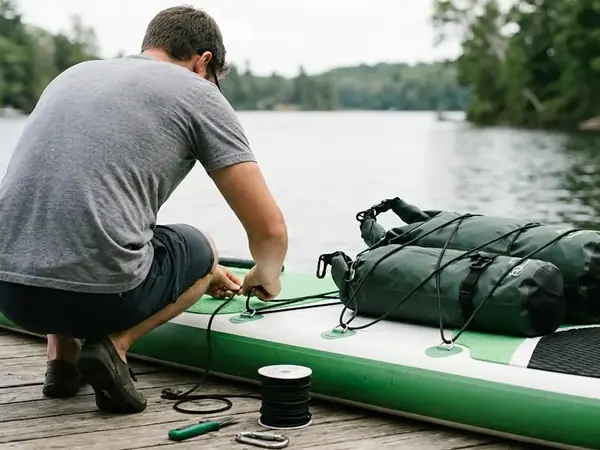
Deck bungees and cargo straps keep soft gear low and centered so the board remains stable. The best load position is usually near the standing area or forward bungee zone, not dangling off the nose or tail.
Risk Factor: A heavy cooler or overpacked dry bag placed far forward can make the nose plow. Too much weight at the tail can slow glide, make steering sluggish, and make remounting less stable.
10. Carry Strap, Roof Straps, or SUP Cart
Transport gear reduces strain before and after paddling. It matters most when the walk from vehicle to water is longer than a quick hand-carry, when the board is already inflated, or when a solo paddler has to manage paddle, pump, PFD, and dry bag at the same time.
Roof straps belong in this category too. A paddler who inflates at home or moves between nearby launch points needs a secure way to carry the board by vehicle, not a rushed knot around a rail.
Repair, Fishing, and Trip-Specific Accessories Worth Adding Next
Not every useful accessory is essential for every paddler. Repair and communication items are broadly useful. Fishing accessories are essential only when the trip actually involves fishing. Keeping those categories separate prevents beginners from mistaking a rod holder or cooler for core safety gear.
11. Compact Repair Kit
A compact repair kit should include patches compatible with the board material, the correct valve wrench if supplied by the manufacturer, and adhesive that matches the patch system. Valve work should be done only when the board is fully depressurized.
Many adhesive-based PVC repairs need a clean, dry surface and cure time measured in hours. For non-emergency fixes, plan on a 12 to 24 hour cure window if the adhesive label calls for it. Field repairs may get a paddler through a small issue, but a wet, sandy shoreline is rarely the place for a careful permanent repair.
12. Waterproof Phone Case or Communication Backup
Navigation, weather checks, and emergency contact depend on keeping electronics dry and attached. A phone inside a waterproof pouch can still be lost if the pouch is loose under deck cords during a fall, capsize, or surfy landing.
Attach the case to the paddler, PFD, or a secure tether point. That choice changes the phone from cargo into a communication backup.
13. Anchor, Rod Holder, or Cooler for SUP Fishing
For SUP anglers, an anchor, rod holder, or cooler can become essential because it organizes tackle, holds position, and keeps fish-handling or food storage contained. On a general recreational paddle, those same items add weight, windage, and snag points around the deck.
The comparison is useful. Fishing gear improves a fishing platform but can make a simple fitness paddle clumsy.
Scope, Limitations, and What to Buy First
Accessory needs change with water temperature, distance from shore, boat traffic, weather, skill level, and local regulations. Within the recreational iSUP frame used here, there is still no universal perfect kit.
Critical Insight: Buy in the order of consequence and dependency: first the items that keep the paddler safer and the board functional, then the gear that protects belongings and reduces transport strain, then repair and specialty accessories.
- First priority: PFD, leash matched to conditions, whistle, visibility light as needed, pump with working gauge, fin, and fin hardware.
- Second priority: Dry bag, deck tie-downs, carry strap, roof straps, or SUP cart.
- Third priority: Repair kit, phone protection, fishing mounts, anchor, or cooler.
A recreational paddler doing short flatwater outings near shore should not use the same accessory assumptions as someone entering surf zones, cold water, whitewater, or remote touring routes. Those settings require specialized training, clothing, rescue planning, and locally appropriate equipment.
Check board-maker instructions for pressure, valve handling, fin installation, and repair materials. Then compare the finished kit with local boating rules before launch.
Final Priority Checklist
The most useful checklist follows the order of a real launch. Run it before the board touches the water, because once the board is floating, small omissions become harder to fix.
- PFD is worn or accessible as required by conditions and local rules.
- Leash matches the water type, with quick-release considerations for moving water.
- Whistle is attached where one hand can reach it.
- Light or visibility marker is packed if the return could be delayed.
- Board is inflated to the maker’s pressure range.
- Fin is installed and the screw, plate, or locking tab is secure.
- Paddle sections are aligned, adjusted, and locked.
- Dry bag is rolled correctly, clipped, and secured low on the deck.
- Phone is protected and tethered to the paddler, PFD, or secure point.
- Repair basics are packed, including compatible patches and any correct valve tool.
- Cargo is balanced near the center rather than hanging off the nose or tail.
A practiced paddler can usually complete this accessory check in not far from 6 to 8 minutes. A new iSUP owner should allow a window trending toward 10 to 15 minutes until the routine becomes familiar. The time is not wasted; it is where missing hardware, loose cargo, and unsafe storage usually reveal themselves.