In this Article
What “Beginner-Friendly” Really Means on an Inflatable SUP
A board advertised as wide and stable can still feel unsteady if it is underinflated, missing its center fin, overloaded with loose gear, or carried into the wind before the paddler has a return plan. Beginners often compare boards by length or price. First-trip success actually depends on how the equipment's features work together on the water.
We define beginner-friendly gear by its handling outcomes. A good starter board offers a steadier stance, predictable tracking, manageable inflation, and obvious attachment points. It reduces uncertainty during four critical beginner moments: carrying the inflated board to the water, kneeling or standing after launch, paddling straight for short distances, and recovering after a wobble.
Relying on marketing labels like premium, pro, ultra-stable, or expedition-ready rarely helps a new paddler. Focus instead on how the board behaves during recreational use, calm-water practice, and entry-level rental decisions.
Criteria for Selecting These Beginner Features
We selected these features because they directly affect stability, setup friction, comfort, transport, or basic on-water safety. Every element on this list can be visually inspected in product photos or at a rental rack.
They are meaningful during the first few paddles and specific to inflatable-board setup. They do not depend on advanced paddling technique. A hands-on check can show that a premium accessory bundle is not automatically beginner-friendly if the pump gauge is hard to read, the fin uses tiny loose hardware, the backpack is uncomfortable, or the paddle clamp slips during adjustment.
We excluded emphasis areas like carbon paddle upgrades, race fin choices, advanced touring hulls, and fishing-specific mounts unless they affect a beginner’s basic setup. Safety gear makes the list because the U.S. Coast Guard treats paddleboards as vessels outside narrow swimming, surfing, or bathing areas. This classification makes personal flotation device (PFD) guidance highly relevant when evaluating beginner equipment.
11 Inflatable Paddleboard Features Beginners Should Understand
Understanding a board moves from its core behavior to the setup parts a beginner touches by hand. Stability, volume, stiffness, inflation, and valve reliability come first because they dictate how the board feels on the water.
1. A Stable Width and Shape
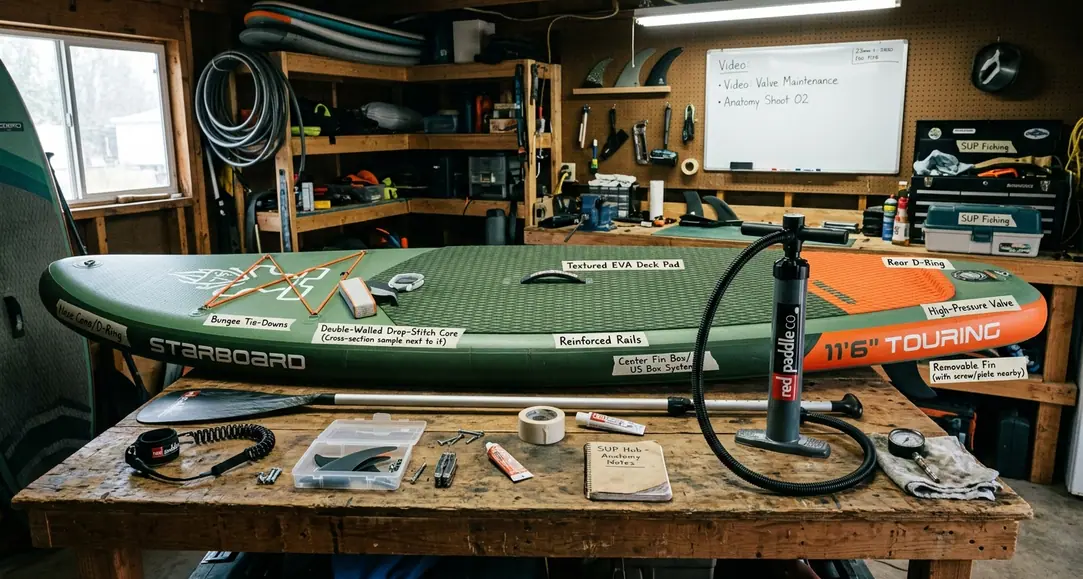
A fuller all-around outline with less aggressive nose and tail taper is easier for first-time balance than narrow touring or race-oriented shapes. Very wide boards may feel slower to paddle and turn, but they provide the necessary platform for learning basic strokes.
2. Adequate Board Volume and Weight Capacity
Capacity should leave a margin for the paddler, wet clothing, footwear, a dry bag, a water bottle, fishing gear, or a small soft cooler. Avoid comparing your body weight to the printed maximum alone. A board pushed to its absolute weight limit sits lower in the water and feels sluggish.
3. Drop-Stitch Core Construction
In practice, inflatable boards rely on a drop-stitch core. This consists of internal threads connecting the top and bottom layers. When inflated, these threads pull tight so the board holds a flatter, rigid shape instead of bulging into a soft tube.
4. Recommended PSI Range
Direct your attention to the valve area, manual, rail print, or pump gauge for the recommended pressure. Underinflation commonly shows up as middle flex, sluggish glide, and a board that feels harder to stand on.
5. Valve and Pump Interface
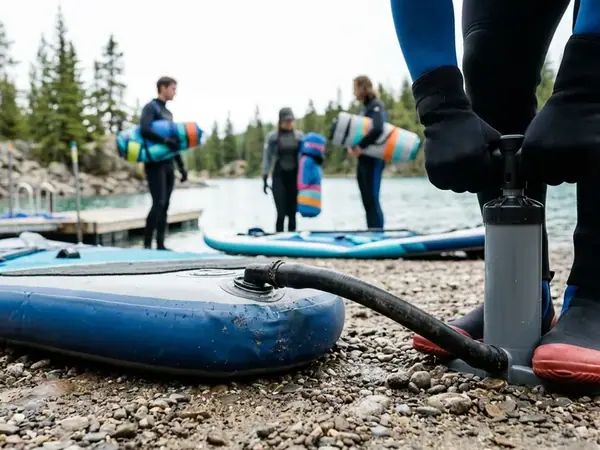
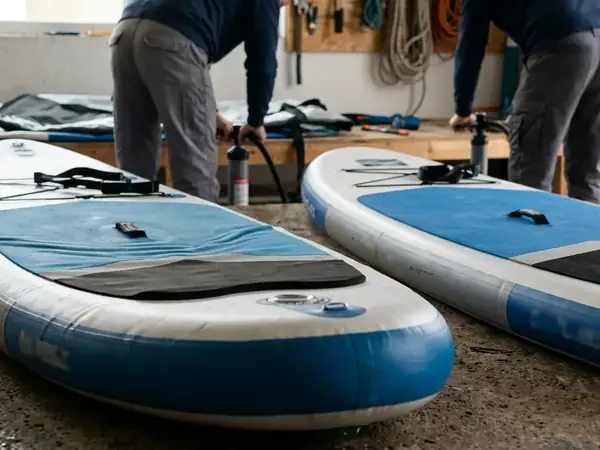
The valve pin must be in the raised position for inflation. The pump hose should lock without cross-threading. A beginner-friendly pump features a gauge that remains readable while the paddler is still pumping near the final pressure range.
6. Deck Pad Coverage
A textured deck pad provides traction for kneeling or standing after launch. Adequate coverage ensures you have grip exactly where you need it when recovering from a wobble.
7. Fin System Reliability
The center fin dictates predictable tracking. Look for a fin box that allows the fin to lock fully into place without requiring tiny, easily lost screws or plates on the shoreline.
8. Carry Handles
A well-placed center carry handle sits at the board's balance point. This makes carrying the inflated board to the water manageable for one person.
9. Cargo Bungees
Front bungees secure water, sandals, and a dry bag. Keeping gear strapped down rather than loose beside the standing area prevents tripping hazards.
10. Leash Attachment Points
An obvious, reinforced D-ring at the tail provides a secure attachment point for your leash. The leash keeps the board tethered to you if you fall.
11. Safety Accessories
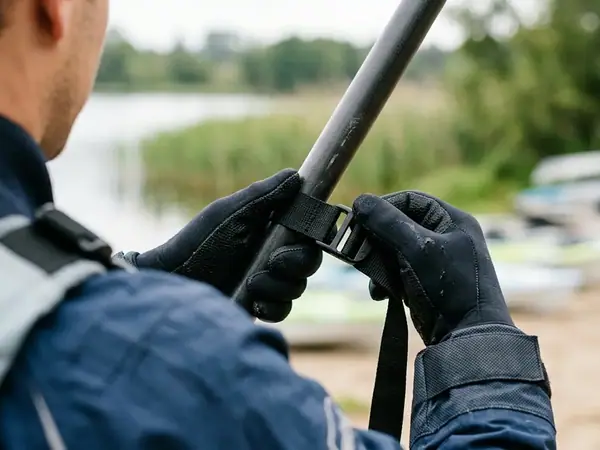
A complete beginner kit accounts for safety. This includes a properly fitted PFD and an adjustable paddle that locks securely at the correct height.
A Five-Minute Setup Check Before the First Launch
The shoreline setup sequence prevents a common problem where the paddler realizes a part is missing only after the board is fully inflated. Order your checks by consequence: air seal first, inflation second, fin and leash decisions third, then paddle fit, cargo, and PFD.
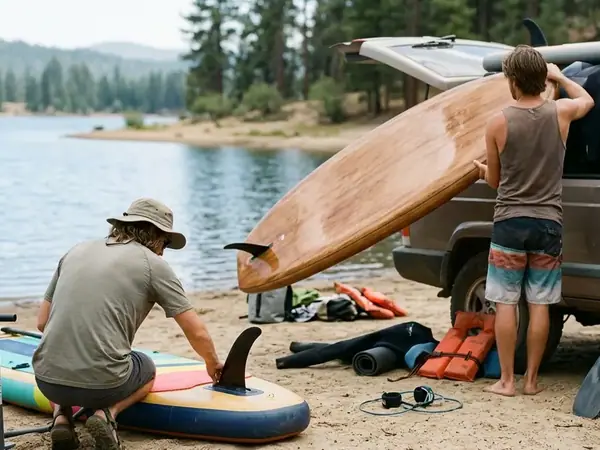
Check the valve pin position. Connect the hose securely. Inflate to the board’s stated range. Remove the hose and confirm the valve cap seats cleanly. Lock the fin fully into its box. Tug lightly on the fin to confirm engagement. Check that no small plate, clip, or screw is left loose on the deck.
Adjust the paddle shaft before stepping into the water so the handle is comfortably reachable while standing upright. Avoid changing length while drifting near shore. Place water, sandals, and a dry bag under the front bungees rather than beside the standing area.
Recommendation:
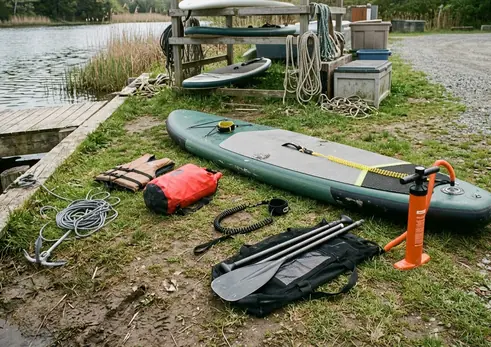
Spend one dry run inflating, deflating, rolling, and installing the fin at home before the first shoreline setup. Doing it on a driveway, garage floor, or grass patch exposes missing adapters or confusing fin hardware without launch-day pressure.
Scope, Safety Limits, and What Features Cannot Solve
Can a highly stable board guarantee a safe trip? A stable board can reduce beginner wobble, but no feature replaces swimming ability, local weather judgment, cold-water planning, route knowledge, or instruction in rougher conditions.
This guidance applies primarily to recreational inflatable SUP use on calm lakes, protected bays, slow rivers, and beginner-friendly launch areas with easy return routes. Surf, whitewater, offshore wind, cold-water crossings, and remote touring require condition-specific instruction and safety planning.
Conditions to call out directly include offshore wind, cold water, fast current, surf zones, whitewater, low-head dams, crowded boat channels, and remote crossings. Safety checks require evaluating the weather forecast, water temperature, route distance, the return plan, visibility, and local rules.
Risk Factor:
Leash advice changes by water type. A calm lake setup is not the same decision as moving river current, surf, or snag-filled water where entanglement and release access matter. Always review U.S. Coast Guard life jacket guidance when planning your safety equipment.
The Smart Beginner Choice Is the Board You Can Set Up Correctly
The best beginner iSUP is not the flashiest kit. It is the board whose stability, inflation system, deck layout, fin, and safety attachments make sense together. Prioritize stability, adequate capacity margin, clear inflation instructions, reliable fin attachment, practical deck layout, and obvious leash and PFD planning.
Try a general all-around inflatable before committing to specialized touring, fishing, race, surf, or whitewater-oriented designs. If the buyer cannot identify the valve, pressure range, fin system, carry handle balance point, leash attachment, and cargo area from the listing or rental inspection, the kit may create avoidable first-trip friction.
These recommendations assume a standard adult weight distribution and may not perfectly translate to paddling with heavy cargo or multiple passengers.
Key point:
Choose features that reduce first-trip confusion and support repeatable setup.