In this Article
- Criteria for Selection
- Pressure and Hull Failures
- Hardware, Handling, and Safety Failures
- Repair Triage
- Scope and Limitations
- Closing Prevention Routine
Briefing: Most iSUP Problems Start Before Launch
Many owner-visible inflatable paddleboard failures are set up long before the board touches the water. A valve pin left depressed after deflation, a board stored rolled while still damp, a fin box packed with sand before installation, or a fully inflated board left on a hot vehicle surface during a shore break all create vulnerabilities. The symptom often appears on the water, but the root cause begins on land.
Prevention is consistently cheaper and safer than repair. Recognizing early warning signs allows paddlers to intervene before a minor inconvenience becomes a trip-ending hazard. This safety and board care guide is written specifically for recreational inflatable SUP owners, travelers, beginners, and SUP anglers. It is not intended for whitewater rescue boards or commercial fleet maintenance programs.
Criteria for Selection: Frequent, Preventable, Safety-Relevant
We reviewed common recreational setup, storage, travel, cleaning, launch, and pack-down scenarios to identify the most pressing maintenance issues. The resulting list is selected based on owner visibility and prevention value rather than dramatic failure severity. This is not a product durability test, a warranty analysis, or a brand comparison.
To qualify for this field guide, each problem had to meet three specific conditions.
- Owner can inspect it: The issue presents visible or tactile symptoms during normal handling.
- Prevention changes the outcome: Routine care directly mitigates the risk.
- Ignoring it can affect performance or safety: The problem degrades board control or structural integrity.
The Preventable List, Part 1: Pressure and Hull Failures
How do you distinguish between a catastrophic puncture and a simple mechanical oversight? Organizing troubleshooting from the valve outward helps isolate the actual point of failure.
1. Slow air loss from a loose valve
A board that softens only after not far from twenty minutes on the water may have a valve-seat problem rather than a visible puncture, especially if the valve pin was recently left open during deflation. Owner-visible signs include softening during a session, a faint hiss at the valve, or bubbles appearing during a soapy-water check around the valve rim.
Prevention requires learning the pin's open and closed positions before the first trip. Inspect the valve seat before launch to ensure no sand or debris is trapped in the seal. Carry the board-specific valve wrench in your kit. If tightening is necessary, stop once the valve is seated rather than forcing it past its natural resistance.
2. Underinflation that causes flex and poor tracking
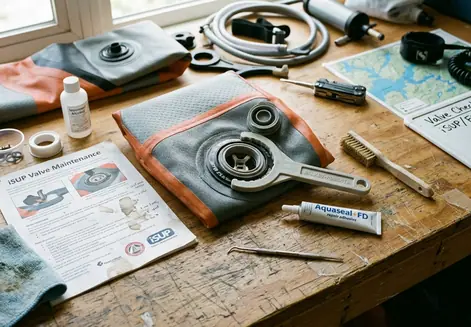
In practice, underinflation drastically alters how a board handles. The nose and tail flex as the paddler shifts stance. The board yaws more with each stroke, the deck feels springy underfoot, and gear weight exaggerates the center sag.
Direct your attention to the printed pressure range on the board, valve ring, or owner manual. Verify that the pump gauge needle moves smoothly before relying on it. Paddling a properly pressurized board improves tracking and reduces fatigue.
3. Overpressure from heat expansion
Heat expansion introduces a severe risk to seam integrity. Direct sun on a beach, a dark truck bed or tailgate, hot pavement at a campsite, and long shore breaks with the board fully inflated and unattended all create dangerous pressure spikes.
Shade the board whenever possible. Release a small amount of air during long shore breaks if the manual allows, and reinflate to the target pressure before paddling again.
The Preventable List, Part 2: Hardware, Handling, and Safety Failures
Board control and human safety rely heavily on the external components attached to the hull. When these fail, the paddler loses the ability to navigate effectively.
4. Fin-box damage and lost tracking
A board that tracks poorly is not always the wrong shape for the paddler; a missing fin screw, sand-packed fin box, or bent fin can create the same yawing complaint. Forcing a fin into a sandy slot, dragging the tail over a boat ramp, stepping into water that is shallower than the fin depth, or paddling across a submerged sandbar without stepping off will damage the hardware.
Rinse the fin box before inserting the fin. Check that the retaining screw or clip is actually seated. Step off the board early when the paddle blade or fin begins touching the bottom.
5. Pump, hose, and gauge failures
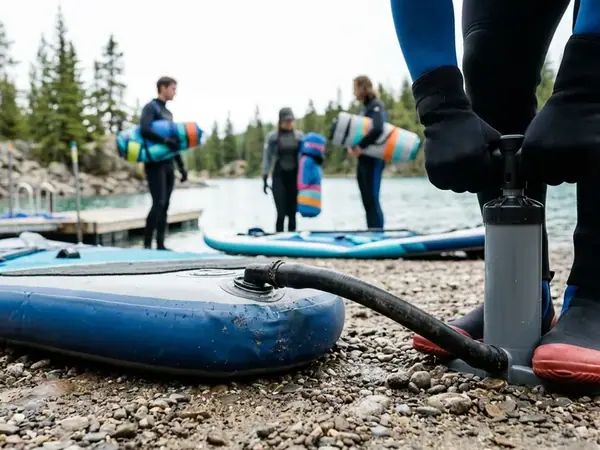
A pump gauge that worked last season can give a misleading setup if the hose gasket is flattened, the fitting is cross-threaded, or grit keeps the seal from seating. Cracked hose ends and a gauge needle stuck at zero are common trip-killers.
Store the pump dry and keep the hose out of the sand during packing. Check the O-ring before travel. Do one full home inflation test before a trip where replacement parts will be hard to find.
6. Slippery deck pads and mildew odors
Sunscreen, fish slime, algae film, mud, spilled drinks, and dried salt degrade the EVA foam deck pad. These residues make the surface slick and trap moisture that leads to mildew.
Fresh-water rinses are mandatory. Use mild soap when needed, ensure full drying, and leave the storage bag open until all residual moisture evaporates.
Risk Factor: A slippery deck pad compromises balance, increasing the likelihood of a fall. Always follow U.S. Coast Guard guidance on wearing life jackets to mitigate the risks of unexpected immersion.
Repair Triage: Fix, Pause, or Contact the Manufacturer
Not all damage should be repaired in the field. Sorting issues into a strict decision tree prevents owners from turning a minor warranty claim into a permanent structural failure.
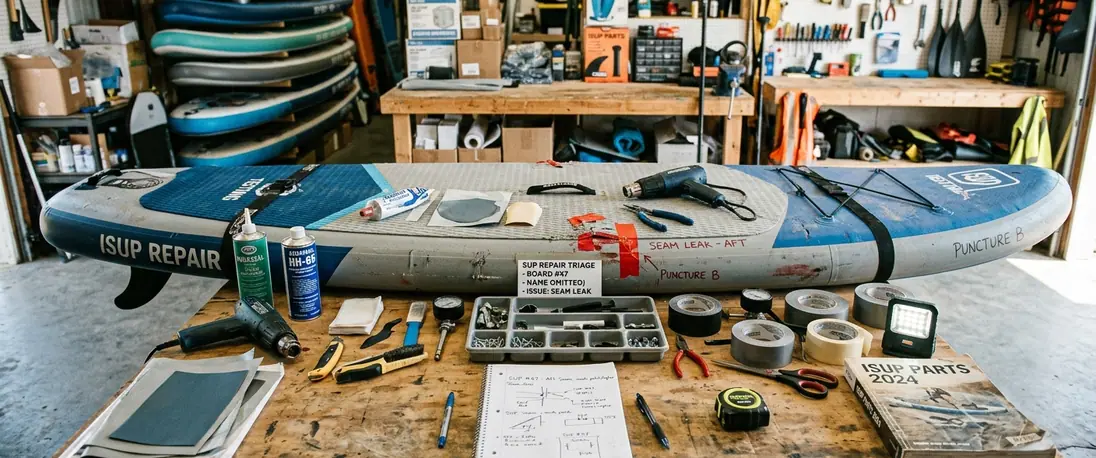
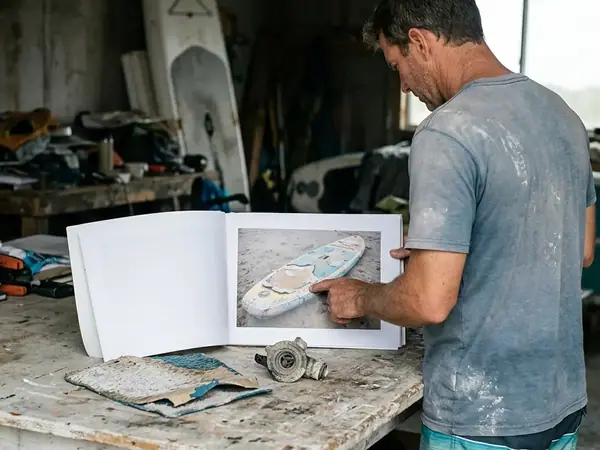
The quick owner fix tier includes cleaning a fin box, reseating or gently tightening a valve with the proper wrench, replacing a hose gasket, or patching a small isolated puncture with the correct kit after the board is fully clean and dry.
The stop-and-repair-later tier requires pausing the trip. This includes recurring air loss after a valve check, any puncture location that cannot be dried properly, uncertain seam damage, a damaged leash attachment, or a fin box that no longer locks the fin securely.
Critical structural issues belong in the manufacturer or warranty contact tier. Visible seam separation, suspected material or drop-stitch defects, pressure-retention problems during normal use, unusual bulging, or any repair category the owner manual says not to handle independently fall into this group. If the board changes shape, loses pressure repeatedly, or cannot hold safety hardware securely, the trip stops before launch.
Scope and Limitations: What This Guide Cannot Diagnose
Field inspections have strict boundaries. This guide cannot confirm internal drop-stitch failure, assign warranty responsibility, approve high-pressure structural repairs, or override a brand-specific owner manual.
Recommendations reflect general recreational iSUP care practices at the time of editorial review and should be checked against the current manual for the specific board. If the board, valve, fin, leash, PFD, weather, water conditions, or rider condition creates doubt, do not launch.
The Closing Routine: Prevent the Next Problem Before the Board Dries
Prevention is easiest when it becomes a fixed sequence rather than a memory test after a tiring paddle. Connecting your pre-launch and post-paddle habits ensures the board is always ready for the next session.
Start the post-paddle routine by rinsing the board, fin, valve area, deck pad, leash attachment, and hardware with fresh water when salt, mud, algae, sand, or fish residue is present. Look along the rails and underside for scuffs, bubbles, lifted seams, fin-box movement, deck-pad peeling, missing screws or clips, and leash or D-ring damage.
Let water drain from the deck pad texture, handles, bungee mounts, and fin box before sealing the board in a storage bag. Open the valve intentionally to deflate, roll without crushing the same tight fold every time, leave repair notes with the board-care pouch, and store away from prolonged heat.
Critical Insight: The best iSUP maintenance habit is a repeatable inspection before inflation, before launch, and before storage.
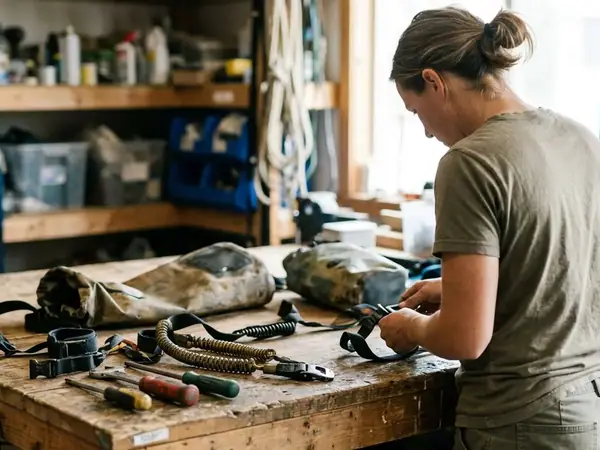
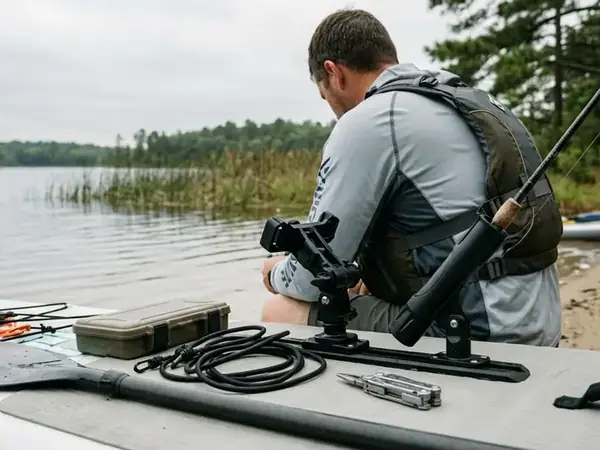
Recommendation: Keep a small board-care pouch with your gear. Include a valve wrench, patch kit and adhesive (if supplied or recommended by the board maker), spare fin screw or clip, small towel, mild cleaner, spare pump gasket, and a simple note card for repair reminders.