What Paddleboard Size Really Means
Ask most buyers how big their paddleboard is, and they'll give you one number: "It's a ten-footer." That single figure tells you almost nothing about how the board will behave once it's loaded, inflated and pushed off a windy launch.
Size is not a length. It's an interaction. Length sets glide, width sets side-to-side steadiness, thickness and outline shape feed into volume, and the manufacturer's rated capacity ties the whole thing back to a real human standing on the deck. A wider board with the same length feels like a different boat. A stiffer drop-stitch core at higher pressure changes how the same dimensions feel underfoot.
I want to be clear about scope before we go further. This is a recreational inflatable SUP sizing guide for flatwater lakes, protected bays, slow rivers, light touring, fitness paddling, travel boards and casual SUP fishing. It is not a surf-specific, whitewater, downwind or race-board fitting guide.
My promise here is simple: instead of handing you a generic chart, I'll walk you through a repeatable sizing process you can run on any board you're considering.
Start With Total Load, Not Just Body Weight
The first input isn't your weight. It's everything that lands on the deck when you actually paddle.
Write the list out: your body weight, clothing, water, a dry bag, food, a spare layer, maybe a fishing crate, a cooler, a dog, a child passenger, overnight gear. That sum is your paddling load, and it's the number that has to sit comfortably under the board's rated capacity.
Weight hides in small places. A liter of water adds just over 2 lb before you count the bottle. A modest day dry bag with a rain shell, towel, phone case, snacks and a first-aid pouch can add several pounds even when it feels like nothing in the car.
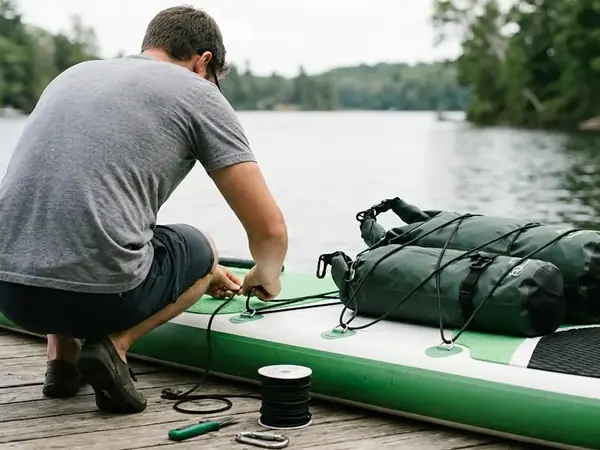
Where the weight sits matters as much as the total. A hard cooler, fishing crate, anchor and rod holders push weight toward the rear half of the deck, shifting trim even when the total stays under the capacity label. And for a two-person paddle, count the second passenger's full body weight plus wet clothing and whatever they're carrying, not just your own.
Manufacturer capacity ratings are model-specific. When a spec sheet and a generic rule of thumb disagree for a particular board, the spec sheet wins.
Critical Insight: A board that floats at its maximum capacity is not the same as a board that paddles well there. Stability, glide, tracking and a dry deck usually fade long before the board actually sinks.
Choose Length, Width and Thickness as a System
The Final Fit Check Before You Buy
These three dimensions trade against each other, so I never tune one in isolation. The trick is to pick a board category first, then compare boards inside that category. Don't line up a compact travel board against a fishing platform and a touring shape and expect the numbers to mean the same thing.
Length
Shorter recreational boards pivot easily at the launch, slide into a car and tuck into a small apartment closet. The cost is glide: they tend to lose momentum sooner between strokes. Longer touring shapes track straighter and offer more deck room for bow bungees and dry bags, especially at a steady cadence.
Width
Width is the stability dial. A wider deck stays calm when a beginner stands up, steps back or shuffles around a cooler. That same width adds wetted surface, so the board feels slower to accelerate. As balance improves, many paddlers want a narrower board that lets them reach the water closer to the rail.
Thickness
Many full-size recreational inflatables use a 6-inch thickness; some smaller or specialty boards run thinner. Thickness feeds volume and rail height, but the feel underfoot depends on stiffness, pressure rating and your load more than the number alone. A thick board that's oversized for a light paddler can simply catch more wind.
Match the Board to the Way You Actually Paddle
Before dimensions, answer one question: which trip happens most often? The 45-minute lake paddle after work? A protected-coast cruise? A fishing morning with a crate? A shared family afternoon? That answer should drive everything else.
- Casual lake paddling rewards predictable first-step stability, an uncluttered deck pad and a board that's easy to remount after a fall.
- Coastal flatwater benefits from straighter tracking, enough nose volume for small wind chop and a fin setup that doesn't wander with every stroke.
- SUP fishing needs standing room around the handle, space ahead of or behind your stance for a crate, and attachment points that keep rods and tools out of the paddle path.
- Family sharing means the board has to tolerate different heights, stance widths and the occasional kneeling passenger without becoming awkward for the smallest regular user.
- Travel storage prioritizes rolled-bag size, bag weight, pump bulk, fin removability and whether you can carry everything from parking to water in one trip.
If you're new, weight the decision toward forgiveness over theoretical speed: easy remounting, a stable stance, a clean deck. For touring and travel, lean the other way toward glide, straight tracking, tie-down space and enough stiffness to carry gear without flexing.
Adjust for Height, Balance and Skill Level
Two paddlers at the same body weight can need different boards. Stance width, center of gravity, athletic background and comfort in moving water all change what feels stable.
Taller paddlers, or anyone with a higher center of mass, often appreciate a little more width or a fuller outline during the first few sessions. When the board rolls, their mass travels farther, so a more forgiving outline buys recovery time.
Smaller paddlers run the opposite risk: being over-boarded. Too much width and length makes the paddle reach awkward, slows the first few strokes and turns wind handling into a chore.
None of this is settled at the shop. A useful on-water check includes kneeling, standing from the handle area, paddling ten strokes per side, stepping one foot back, making a slow turn and remounting in calm, shallow water. Give it time, too. A first session should run long enough that you stop bracing constantly; 20 to 30 minutes on calm water tells you far more than a single shaky stand-up.
When a Bigger Paddleboard Becomes the Wrong Choice
Bigger is not automatically safer. It's a common instinct, and it backfires more than buyers expect.
An oversized inflatable presents more rail and deck to crosswind, so a light paddler drifts sideways faster at the same launch than they would on a smaller board. Extra length makes beach starts, dock turns and car-to-water handling clumsy, especially when you're solo. And extra width can quietly hide poor mechanics, because the board feels secure while you take short, inefficient strokes far from the rail.
Picture a light paddler on a fishing-style platform: rock-solid at the dock, then unable to hold a line across a breezy lake. Now picture a family board sized for the largest adult that leaves a smaller teenager fighting a deck too wide to paddle near the rail and too long to turn with confidence.
Size up only when the added area solves a real problem: a dog, a child, a cooler, a crate, an anchor bag, dry bags, or a beginner who genuinely needs more recovery margin after small mistakes.
Risk Factor: Board size is not a substitute for the basics. Check the wind, wear the correct leash for your waterway, know how to swim, carry a properly fitted life jacket and choose a launch with realistic rescue options. See the U.S. Coast Guard life jacket guidance.
What Sizing Charts Cannot Tell You
I lean on a sizing method rather than a universal chart for one reason: charts can't see most of what determines how a board feels.
A chart cannot account for hull outline, rail shape, drop-stitch stiffness, inflation pressure, fin size, fin box position, deck cargo placement, current, wind texture or your own confidence. Two boards with identical dimensions can paddle differently once those variables come into play.
Specs also move. Product dimensions and capacity labels can change between model-year updates, so verify the current specification sheet during your purchase window instead of trusting an older review or a reseller summary. Check inflation pressure against the range printed by the maker; many recreational inflatables are designed around double-digit PSI, but the safe operating range is model-specific.
One honest caveat: this guide covers recreational inflatable SUP selection on flatwater and protected conditions. Surf zones, whitewater, racing and expedition paddling demand discipline-specific instruction and equipment judgment that no sizing process here replaces. Cold water, offshore wind, boat traffic, tidal current and limited rescue access should shape your final safety setup even when the chart says the board fits.
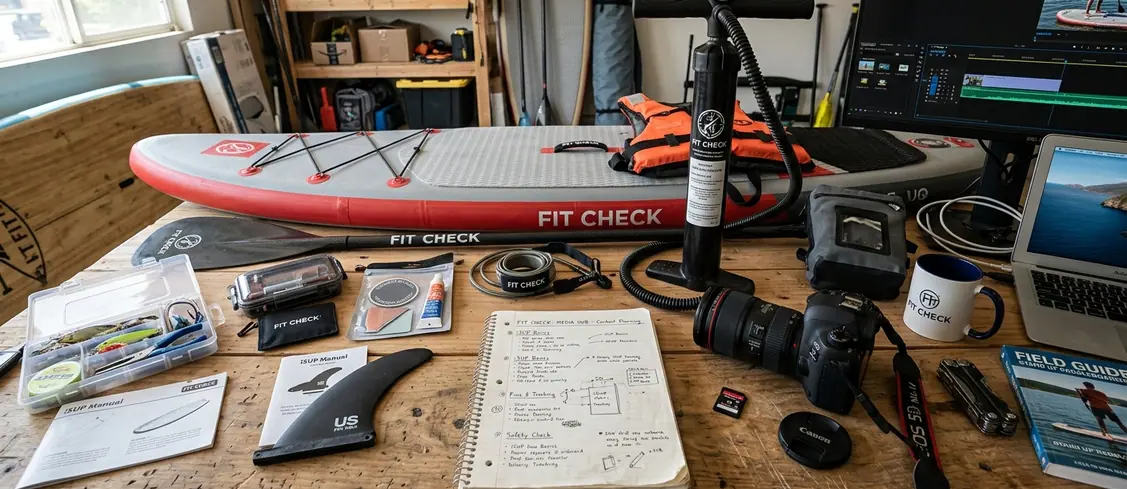
By now you've probably narrowed it to two boards sitting close together. Here's the filter I use to break the tie.
- Total load — does it stay comfortably under capacity, not crowding the maximum?
- Primary use case, does the shape match your most frequent trip?
- Required stability, is the stance area forgiving enough for your skill today?
- Transport limits, can you carry it from vehicle to water in one trip?
- Storage space, does the rolled bag fit where you live?
- Inflation effort, is the pump and pressure realistic for you?
- Manufacturer capacity guidance, does the rated range cover you and your load?
When two boards both pass, choose the one that better matches your real launch sites and the trips you take most. The everyday paddle wins over the once-a-season scenario.
Then inspect the details a dimension list never shows. Look at deck pad length, the center and nose handle placement, the rear handle position, bungee layout, D-ring locations, fin box type, pump quality, hose fittings and packed bag weight.
A board that looks right on paper can still annoy you in practice if the carry handle sits under a cooler, the bungees block your standing area, the fin is hard to replace or the packed bag is too heavy for the walk to the water.
The standard I aim for is plain: the right board feels stable enough to build confidence, efficient enough that you want to paddle often, and manageable enough to transport without friction. Get those three, and the size was right.