In this Article
- First, read board shape as a set of trade-offs
- The five shape variables that matter most
- Why width and outline decide how steady the board feels
- Why longer, straighter boards glide and track better
- How the nose and tail change turning behavior
- Rocker, rails, and thickness: the inflatable-specific layer
- Match the shape to the way you actually paddle
- A simple on-water test before you blame the board
First, read board shape as a set of trade-offs
I read paddleboard shape in three passes: first from above, then from the side, then through the symptom it creates on the water.
From above, length, width, outline, nose, and tail tell you how the board is likely to stand, glide, track, and turn. From the side, rocker and thickness tell you something about chop handling, ride height, volume, and wind push. Then the real question starts: does the board wander, feel twitchy, stall between strokes, resist turns, or carry a cooler, dry bag, dog, or fishing crate without drama?
That is the useful lens. Shape is not a contest to find one best board. It is a set of trades between initial steadiness underfoot, glide after each stroke, ability to hold a line, ease of pivoting, and comfort under load.
This guide is written for common inflatable SUP use: lake paddles of 30 to 120 minutes, sheltered bay routes, slow river floats, campground travel, and fishing sessions where the board often moves below walking pace. Elite race tuning is a different conversation.
Critical Insight: A board that feels wonderfully calm while casting may feel slow across open water. A board that tracks cleanly on a quiet reservoir may become work in a narrow creek where every bend asks for a pivot.
The five shape variables that matter most
Start with the features you can verify from a product photo, spec sheet, or rental rack. Do not let the vocabulary get in the way.
Read the board from above
Length is the nose-to-tail measurement. Based on available benchmarks, typical adult recreational inflatable boards commonly sit around 10 ft 6 in to 11 ft 6 in long, while touring-leaning inflatables often extend into the 12 ft to 14 ft range. Longer is not automatically better; it usually means more glide and tracking, with slower pivots in tight places.
Width is the side-to-side measurement. A 2 in difference is noticeable for many beginners when thickness, stiffness, fin setup, and load are otherwise similar.
Outline curve is the board’s top-down shape, also called plan shape. Rails that stay nearly parallel through the middle third usually favor tracking and glide. Fuller, more curved rails usually favor easy turning and steadiness at low speed.
Read the ends and the side
Nose shape affects deck space and how the board enters small chop. A full recreational nose gives room and confidence. A tapered touring nose parts light chop more cleanly when the paddler keeps momentum.
Tail shape affects how the board supports rear-foot pressure, cargo, and turns. Square or squash tails feel planted. Narrower tails release turns with less effort.
Rocker is the upward curve at the nose and tail when viewed from the side. Thickness affects volume, stiffness, ride height, and windage. Most general-purpose inflatable SUPs use 5 in or 6 in thickness, but thickness alone does not guarantee stability.
Inflatable construction softens some differences compared with hard boards. The rails are rounder, the board flexes differently, and fin setup can dominate the feel. Still, the same visual cues help you compare models before you get wet.
Why width and outline decide how steady the board feels
The first 60 seconds tell the story: ankle wobble, side-to-side roll, and whether the board settles after a paddle stroke.
Primary stability is that initial steadiness when you stand, shift weight, reach with the paddle, kneel, or brace. Wider boards put more surface area under the paddler and usually feel calmer underfoot for beginners, anglers, dog owners, and loaded touring. Beginner-friendly all-around inflatables are often in the 32 to 35 in width range. Narrower fitness or touring shapes can reward balance and clean technique, but they may feel lively while stationary.
The outline matters as much as the maximum width printed on the spec sheet. A 34 in wide inflatable can still feel nervous if the wide point is short, the board is underinflated, the paddler stands behind the handle, or the fin is not fully locked.
In a shop or rental lineup, stand two boards side by side. Compare rail fullness roughly 12 to 18 in forward and aft of the center carry handle. That is where many recreational paddlers shift feet, open dry bags, reach for a dog, take photos, or rotate to sit on a cooler.
Rounded all-around boards resist twitchiness at low speed because they carry width through the standing zone. Narrow touring outlines may feel more animated until they begin moving, then settle into a cleaner forward rhythm.
Risk Factor: Before blaming the outline, check inflation pressure, main fin seating, cargo position, and stance. A good shape can feel poor when the setup is wrong.
Why longer, straighter boards glide and track better
What do glide and tracking look like without a stopwatch?
Glide is how far the board continues forward after a stroke. Tracking is how well it holds a line without constant correction. You can feel both with simple checks: take 6 to 8 relaxed strokes on one side, stop cleanly, and watch whether the board coasts or stalls and yaws. Then paddle 10 strokes on one side at a conversational pace and see whether the nose drifts sharply off line or holds a manageable heading.
Longer boards with straighter rails give the waterline more directional bias. That is why touring shapes feel less busy on open lake crossings and sheltered bay routes. They do not ask you to switch paddle sides as often, and they reward a steady cadence.
A pointed touring nose helps most when the paddler keeps momentum through light chop. At very low speed, technique and balance can matter more than nose shape. It helps in small chop when the paddler keeps momentum, but it does not rescue poor trim if heavy bags are strapped too far forward.
The trade appears near docks, creek bends, tight marinas, and beach landings. The same length and straight rail line that reduce correction strokes can require wider sweep strokes or a small step-back input to pivot.
How the nose and tail change turning behavior
Turning starts under your feet, but many paddlers only notice the nose. That is backward.
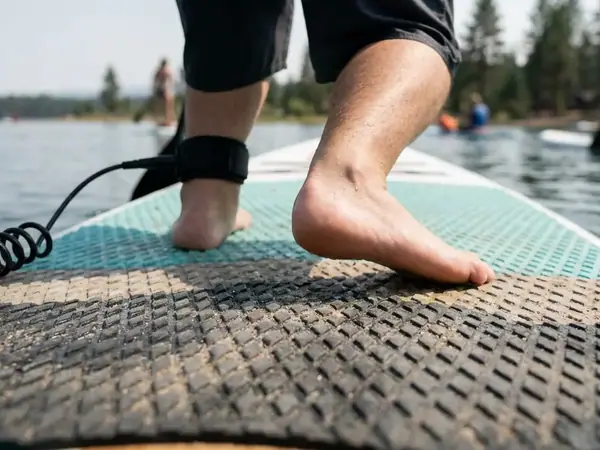
Feel the tail first. A wider square or squash tail gives more platform when you shift rearward, stand still, load gear, or practice casual step-back turns. That helps a fishing board when the paddler rotates to cast, reaches for pliers, or shifts weight toward a crate. A narrower or more tapered tail sinks with less rear-foot pressure and can pivot more readily.
The nose still matters. A broad nose adds usable deck area for a small dry bag, footwear, or a child seated low. It also gives low-speed confidence because the front of the board feels less delicate. The cost shows up during quick sweep turns, where a blunt nose can slap or push water if the board is not carrying speed.
A pointed or tapered nose supports cleaner forward travel, especially through small chop. It may feel less forgiving when a beginner stands too far forward of the handle and buries the nose during acceleration.
A practical turning drill
- Start from a neutral stance near the carry handle.
- Make a wide sweep turn and notice how much space the board needs.
- Move the rear foot back in small increments of 6 to 10 in.
- Repeat the sweep turn without jumping directly to the tail pad.
- Stop if the tail sinks abruptly or the nose lifts more than you can control.
A travel touring board benefits from directional control. A creek-exploration board benefits from easier sweep turns around strainers, gravel bars, and tight bends. Same sport, different geometry.
Rocker, rails, and thickness: the inflatable-specific layer
Rocker is the upward curve visible from the side. More nose rocker helps the board ride over small wind chop and reduces pearling, where the nose stuffs into the water. A flatter profile usually feels more efficient on calm lakes and slow canals.
That side view matters most when the water is uneven. A noticeably flatter nose may glide well on glassy water but is more likely to slap or pearl when paddled into short, stacked chop. More rocker can calm that entry, though it may also shorten the effective waterline on flat water.
Inflatable rails need careful language. They are generally rounder than hard-board rails, so they do not bite into turns with the same crisp edge feel. For recreational paddlers, fin setup and paddle strokes often dominate carving behavior more than rail shape.
Thickness adds another layer. Six-inch-thick inflatables can carry camping bags, fishing gear, or heavier paddlers better than many lower-volume boards, but the higher ride can catch more wind during exposed crossings. A practical check is to drift broadside for 20 to 30 seconds with the paddle held out of the water and notice whether the board weathercocks.
Recommendation: Treat rocker and thickness as part of the whole shape, not shortcuts. This frame fits common recreational inflatable SUPs, not race boards, surf-specific hard boards, whitewater SUPs, or foil-oriented designs.
Match the shape to the way you actually paddle
Begin with your most common session, not the trip you imagine once a summer.
Shape choice checklist for recreational iSUP buyers
- Beginner lake paddling: Choose a balanced all-around outline with width carried through the standing area, a rounded or moderately full nose, and predictable fin tracking.
- Family use: Favor deck space, a calmer midsection, tie-down points, and a shape that remains manageable when a child, dog, or small dry bag shifts weight.
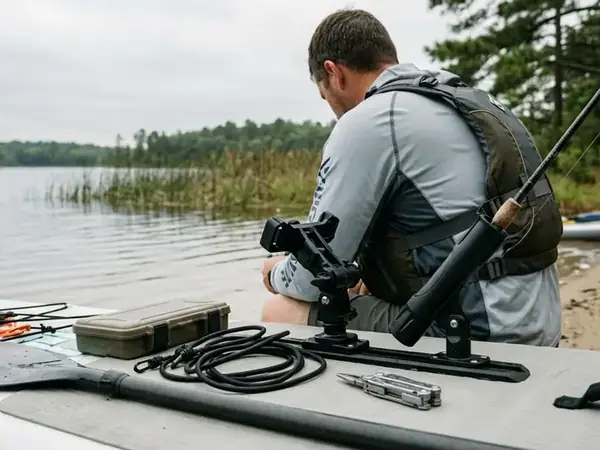
- SUP fishing: Prioritize a wider midsection, broad tail, open deck pad, and low-speed stability over top-end glide. Standing still and rotating safely matter more than covering distance quickly.
- Travel touring: Prioritize length, straighter rails, a tapered nose, and enough volume to carry dry bags without sinking the tail or burying the nose.
- Fitness paddling: A longer and narrower board rewards clean strokes and cadence, but it can punish tense ankles, crosswind, boat wake, and fatigue.
- Light surf: Look for manageable length, some nose rocker, and a tail that releases more easily than a cargo-first fishing shape.
- Mixed-use ownership: Accept compromise deliberately. A rounded all-around inflatable will not glide like a touring board, but it may be the board that gets used most often.
If the question is where you will paddle most often, calm lakes tolerate all-around shapes. Exposed bays and longer routes favor length, straighter rails, and a more tapered nose.
The hard part is honesty. A board bought for imaginary long crossings may frustrate a beginner on short family paddles. A wide fishing platform may feel perfect in a cove and dull on a 90-minute upwind return.
A simple on-water test before you blame the board
Run this test before deciding the shape is wrong. Setup errors can imitate bad geometry.
- Choose protected water with enough clear room to paddle 30 to 50 yards without crossing traffic, docks, swimmers, or anchored lines.
- Inflate to the board maker’s stated operating range.
- Confirm the main fin is fully seated and locked before launching.
- Place cargo near the center handle for the first run. Do not load a cooler or heavy dry bag on the rear bungees until the baseline handling is known.
- Paddle straight for 8 to 12 strokes.
- Stop paddling and feel the glide.
- Make a wide sweep turn from a neutral stance.
- Repeat the turn after moving the rear foot back 6 to 12 in.
- If conditions allow, repeat the same sequence into light wind and back with the wind.
This sequence separates shape from setup. Underinflation can make a board flex and wander. A loose fin can ruin tracking. Cargo placed too far aft can lift the nose and slow forward travel; cargo too far forward can bury the nose.
Keep the safety margin boring. Wear the safety gear required for the location, test in protected water, and avoid experimenting with step-back turns in current, boat wake, or cold water. The best board shape is still only useful when the session gives you room to recover.