How to Use This Seasonal SUP Checklist
Packing a paddleboard for travel requires more than throwing gear into a bag. The checklist below follows trip decisions rather than simple packing categories.
In this Article
- The Core SUP Travel Kit That Stays the Same
- Spring Checklist: Cold Water, Runoff, and Unsettled Weather
- Summer Checklist: Heat, Crowds, Sun, and Afternoon Wind
- Fall Checklist: Shorter Days, Cooling Water, and Quiet Launches
- Winter Checklist: Cold-Exposure Planning and Conservative Routes
- Pre-Departure, Launch-Site, and Post-Trip Checks
- Scope, Limitations, and When to Seek Local Advice
Editor’s note: I frame expedition planning around four variables that change with the season: water temperature, weather volatility, daylight, and launch access.
Route planning, board transport, inflation setup, clothing, leash and PFD choice, dry storage, navigation backup, and wet-gear recovery all interact. Pack for the water and the recovery conditions after a fall, not only for the air temperature at the launch.
The Core SUP Travel Kit That Stays the Same
A missing fin plate stops a recreational inflatable SUP trip before it starts. Build the baseline kit around the items that guarantee you can actually get on the water.
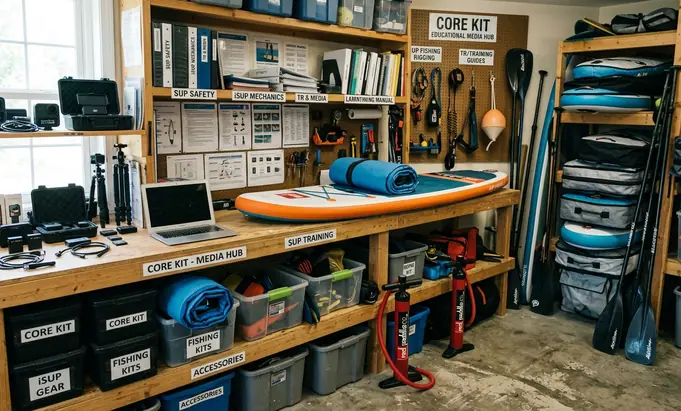
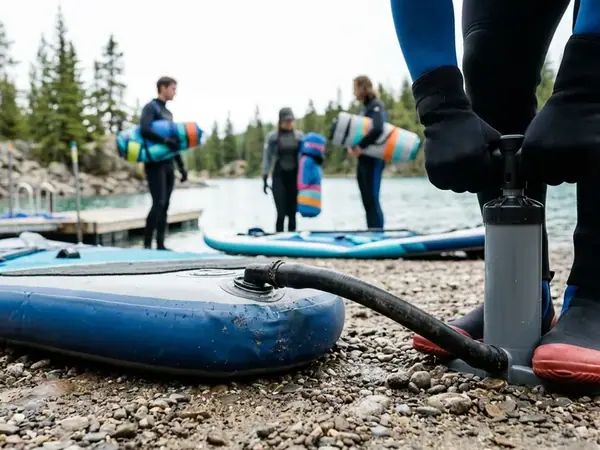
The year-round baseline kit includes the inflatable SUP, pump, pump hose, fin, leash matched to the venue, paddle, personal flotation device, dry bag, repair kit, towel, drinking water, and a navigation backup.
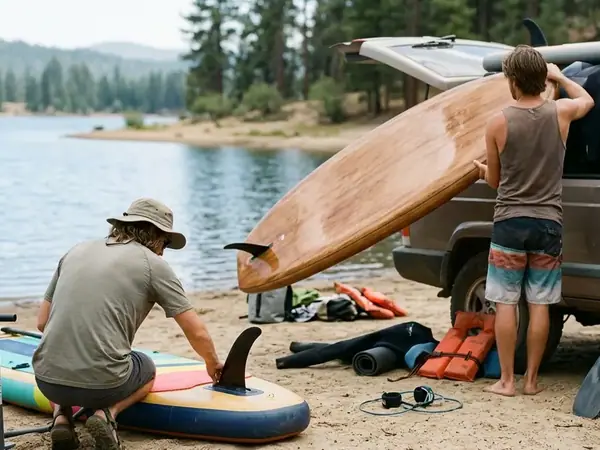
Transport checks matter for traveling iSUP owners. Before leaving, confirm the valve cap is seated, the fin box is protected from side pressure, the pump hose is packed with the pump body, paddle sections are secured together, and the total bag weight is kept manageable for the actual walk from a vehicle, train platform, lodging, or dock.
In practice, separating wet and dry items streamlines short-haul air travel or van transport. Use one dry bag or tote for clothing and electronics. Keep a separate mesh bag or tub for the leash, booties, towel, and damp deck items after paddling.
Recommendation: Keep the fin, leash, and valve wrench in one bright pouch so a missing small part is visible before the board is unrolled.
Spring Checklist: Cold Water, Runoff, and Unsettled Weather
Why do so many paddlers get caught off guard in April? Spring operates as a mismatch season.
The launch area may feel comfortable while the water, current, and banks still behave like late winter. Prioritize immersion planning and access inspection before committing to a route. Check the local water level, recent rain, access notices, and wind forecast the evening before departure and again on the morning of the paddle.
A spring trip can look safe from shore while runoff creates faster current, floating branches, muddy footing, and cold immersion consequences. Runoff and rain leave behind submerged debris, slippery banks, and limited standing depth near shore. Choose a route with visible shoreline exits. Avoid committing to a long downstream or open-water crossing when the forecast is unsettled.
Your clothing plan requires cold-water layers or splash protection. Pack spare dry clothing and establish a clear change plan at the vehicle rather than relying on a public restroom being open.
Risk Factor: Do not treat sunny spring weather as evidence that immersion risk is low.
Summer Checklist: Heat, Crowds, Sun, and Afternoon Wind
Summer paddling demands heat management and crowd navigation rather than just warm-weather comfort.
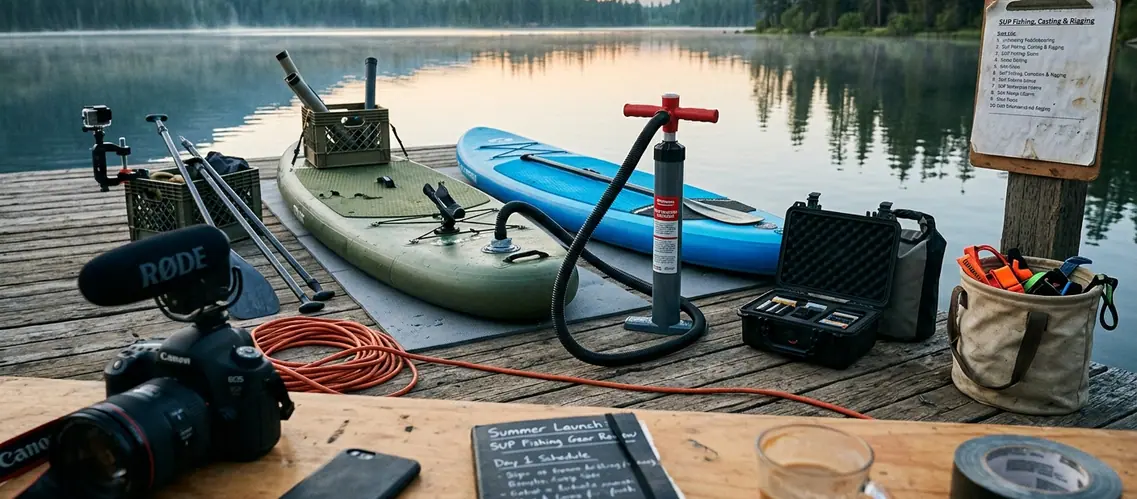
A summer beginner route can fail because the parking lot fills early, the ramp gets crowded with boats, and the return leg faces afternoon wind even though the air temperature feels ideal. Organize the trip plan backward from parking, shade, boat traffic, and the wind pattern.
Prioritize drinking water, sun protection, a brimmed hat or sunglasses retention, and footwear for hot pavement or gravel. Bring a cooler or insulated bag for post-paddle recovery. Launch timing dictates the experience. Busy ramps, boat wakes, rental traffic, limited parking, and thermal winds turn a beginner-friendly route into a harder return paddle.
Inflatable board care shifts in the heat. Check the pressure after the board has been sitting in the sun. Avoid leaving a fully inflated board inside a closed hot vehicle. Stage the board in the shade while preparing paddles, PFDs, and dry bags.
For casual SUP fishing and family travel, secure tackle and stow hooks before carrying the board. Keep standing and kneeling deck space clear, and choose routes away from heavy boat channels when beginners or children are involved.
Fall Checklist: Shorter Days, Cooling Water, and Quiet Launches
A fall destination paddle can be shortened by a locked park gate, closed restroom, unavailable shuttle, or earlier dusk rather than by paddling ability.
Fall serves as the transition season. Fewer crowds improve travel, but reduced daylight and cooling water shrink the margin for delays. Decide route length and turnaround time before leaving the shore.
Checklist items expand to include an earlier start time, a headlamp or small deck light, a spare warm layer, a thermos, and a dry change of clothes. Confirm seasonal park hours, campground status, gate closing times, and shuttle availability before driving to a launch.
Route hazards change as the canopy drops. Floating leaves hide shallow rocks or sticks. Wind shifts make the return slower. Post-storm debris catches fins near landings.
Trip Check: Fall trips reward conservative route length, clear turnaround times, and a warm recovery plan more than ambitious distance.
Winter Checklist: Cold-Exposure Planning and Conservative Routes
How do we approach freezing temperatures on the water? Treat winter as its own risk category, not simply a colder version of fall.
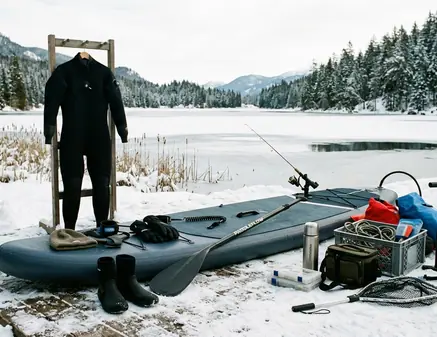
The planning order shifts entirely to immersion survival, rewarming, partner support, and simple logistics before scenery or distance.
Clothing and safety considerations require specific gear. Wear a drysuit or suitable cold-water protection where appropriate. Add insulated layers that still allow movement, neoprene gloves or booties, and a warm hat. Establish a reliable rewarming plan immediately after landing. Select short routes close to shore with simple put-in and take-out points. Avoid complicated shuttles. Paddle with a partner and leave a trip plan with someone on land.
Cold setup details require patience. Inflatable boards, pumps, valve seals, fin boxes, and plastic fittings feel stiffer in cold conditions. Allow a longer setup window and avoid forcing parts that are not seated cleanly.
Check cold-water guidance before you go; rely on the National Weather Service cold-water safety guidance as the single external authority for immersion-risk context.
Risk Factor: If the paddler cannot confidently recover from a fall and warm up afterward, the winter trip plan should be changed or canceled.
Pre-Departure, Launch-Site, and Post-Trip Checks
Seasonal advice only works if it survives the drive, the launch-site reality check, and the wet-gear cleanup afterward.
This checklist breaks the process into three distinct stages.
- Before leaving home: Confirm the weather window, route, access rules, board components, safety gear, clothing, snacks, drinking water, and vehicle storage plan.
- At the launch: Reassess wind direction, shoreline exits, boat traffic, current, water clarity, and footing. Determine whether the selected route still matches the day’s actual conditions.
- After the paddle: Rinse or dry the board as conditions allow. Loosen packed wet gear, inspect the fin and rail areas, recharge lights or devices, and repack the repair kit before storing the travel bag.
Editor’s note: Repeated checks are intentional because SUP travel failures often come from small omissions made during packing or rushed launch setup.
Scope, Limitations, and When to Seek Local Advice
Taking a recreational travel checklist onto technical whitewater introduces immediate danger. Know the boundaries of your preparation.
This guide targets recreational inflatable SUP travel, day trips, beginner-to-intermediate touring, casual SUP fishing, and destination planning. It is not a substitute for formal cold-water rescue training, whitewater instruction, surf-zone coaching, local navigation rules, or medical advice.
These seasonal guidelines support general travel readiness, but local microclimates frequently override broad advice.
Defer to local outfitters, rangers, harbor authorities, weather services, posted launch rules, and access notices when conditions conflict with a general checklist. The best seasonal checklist is the one that makes it easy to postpone, shorten, or simplify the trip.