In this Article
- Carbon, Aluminum, and Hybrid Shafts
- Blade Shape and Locking Systems
- Anatomy of a Collapsible Paddle
- Matching the Paddle to the Trip
- SUP Fishing Considerations
- Maintenance and Safety
- Scope and Limitations
- Verdict and Buying Checklist
Why Collapsible SUP Paddles Matter for Inflatable Boarders
The packing problem usually hits you at the car trunk. A rolled inflatable board, high-pressure pump, center fin, leash, dry bag, PFD, repair kit, and tackle crate all fight for limited space. Fitting a fixed-length paddle into that geometry rarely works. Adjustable multi-piece SUP paddles—usually two-piece, three-piece, or four-piece designs, solve the spatial bottleneck for trailhead hikes, airline counters, and cramped campsites.
We evaluate design tradeoffs rather than naming one universal best paddle. A very light carbon paddle can still feel poor if a loose ferrule clicks during every power stroke. A basic aluminum paddle may be the better family or loaner choice when it will be dropped on gravel, packed under pumps, or adjusted by beginners.
Our Review Lens: Packability, Stiffness, Locks, and On-Water Control
Evaluating a paddle requires looking past the marketing label on the shaft. We judge designs through shaft material, joint security, blade feel, adjustment range, corrosion resistance, packed length, and field serviceability.
These criteria apply across four distinct buyer contexts: recreational iSUP use, travel board bags, SUP fishing layouts, and beginner-to-intermediate control. Published paddle weights and packed lengths are not reported consistently across brands. Cross-checking usually gives a more useful comparison than relying on spec sheets alone.
Field takeaway: The best collapsible paddle is usually the one whose weakest point matches your lowest-risk use case, not the one with the lightest spec sheet.
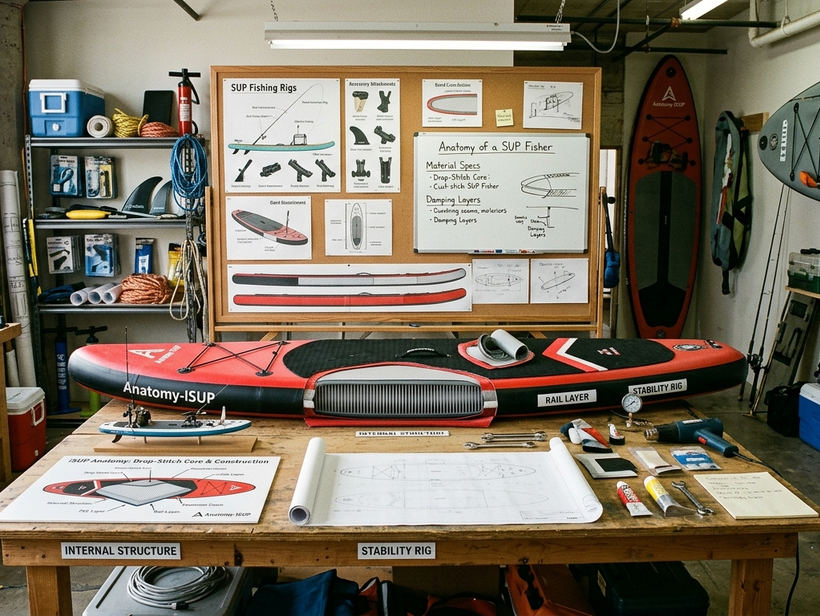
Anatomy of a Collapsible SUP Paddle: Sections, Ferrules, Clamps, and Handles
How does a paddle actually transfer power? You have to inspect it as a chain of load points. Failures and annoying flex usually come from interfaces rather than the shaft material itself.
The parts work in order from hand to water: handle grip, adjustable shaft, ferrule joints, push-button pins, cam lock or lever clamp, blade neck, blade face, and drip edge. Two-piece paddles reduce the joint count but pack longer. Three-piece and four-piece paddles fit travel bags more easily but introduce more ferrules to inspect.
Joint looseness that feels small on shore becomes obvious during repeated forward strokes, sweep turns, draw strokes, and low braces. Check adjustability with the paddler standing on the actual inflatable board. Thicker decks and higher freeboard change the useful shaft length.
Carbon, Aluminum, and Hybrid Shafts: What the Material Really Changes
Carbon shafts feel lighter in repeated strokes and transfer power crisply. They deserve more care around sharp impacts, hard luggage edges, roof-rack compression, and garage storage loads. A premium material requires premium handling.
Aluminum shafts remain common in entry-level and rental-style inflatable SUP kits. They tolerate casual handling and keep replacement costs lower. Hybrid shafts, including carbon-blend, fiberglass, and other composite constructions, act as middle-ground designs rather than assumed upgrades.
Material Comparison Matrix
- Carbon: Low fatigue feel, low impact tolerance, higher price, stiff feel, low corrosion concern. Best for touring and frequent use.
- Aluminum: High fatigue feel, high impact tolerance, lower price, moderate flex, moderate corrosion concern. Best for budget kits and rentals.
- Hybrid: Moderate fatigue feel, moderate impact tolerance, mid-range price, variable flex, low corrosion concern. Best for all-around recreational use.
Blade Shape and Locking Systems Decide How the Paddle Feels
Many buyers blame shaft material for a vague paddle feel when the real issue is blade load or ferrule movement. Smaller or narrower blades generally suit higher cadence, lighter paddlers, beginners protecting their shoulders, and long casual sessions. Larger blades make more sense for stronger paddlers, loaded boards, short power moves, or maneuvering a fishing setup in wind.
Locking systems dictate security. Push-button ferrules are compact and simple but can rattle when worn or sandy. Lever clamps are fast to adjust but need correct tension. Hybrid lock systems add security at the cost of more parts.
Before launching, assemble the paddle fully. Twist each joint by hand, press the handle downward lightly, and re-seat any ferrule or clamp that moves under hand pressure. Cold fingers, wet gloves, sand on a beach launch, and salt residue can turn an otherwise good lock into an irritating one.
Match the Paddle to the Trip: Travel, Fishing, Touring, and Spare-Paddle Duty
Which paddle fits the trip friction? The same paddle can be excellent in a hotel-to-marina travel kit and frustrating on a windy fishing launch.
For travel iSUP use, measure the longest packed paddle section including the blade. Compare it with the usable interior length of the board bag after the pump and rolled board are inside. A three-piece paddle that fits the board bag on paper may not fit once the rolled board, pump hose, fin box, and dry bag are already inside.
SUP anglers should prioritize quiet assembly, corrosion-resistant hardware, secure length markings, and predictable blade control while maneuvering around rods, tackle crates, anchor lines, and stake-out poles. Touring paddlers should look for cleaner shaft feel, lower fatigue, and a blade that supports repeated strokes over longer sessions.
For beginner kits, visible adjustment marks, easy clamps, and rugged handling matter more than chasing the lightest premium construction. For spare-paddle duty, assemble and check the backup before every outing rather than leaving it untouched in the bag for an entire season.
Maintenance, Failure Points, and the Safety Role of a Reliable Paddle
After saltwater or sandy launches, separate the paddle sections the same day. Rinse ferrules and buttons with fresh water. Let parts dry before storing them inside a zipped board bag.
Do not pack hard luggage, pumps, camp stoves, or tackle boxes directly across a hollow shaft where they can crush or ovalize the tube. Check spring buttons, clamp screws, blade wobble, slipping length marks, bent aluminum, cracks near joints, sticky buttons, and persistent rattle before launch.
Risk Factor: A paddle is part of propulsion and control. It is not a substitute for required safety gear. Align your preparation with official paddlecraft guidance; a reliable paddle does not replace a properly fitted life jacket (U.S. Coast Guard life jacket guidance), leash choice appropriate to the waterway, signaling gear, and weather judgment.
Scope and Limitations
This evaluation focuses on recreational inflatable SUP use, travel packing, accessory rigging, SUP fishing setups, and general on-water control. We exclude full ranking of every current product, verification of every manufacturer specification, elite racing paddles, whitewater rescue gear, surf-specific paddles, and expedition builds.
Durability depends heavily on brand execution, storage habits, launch conditions, salt or sand exposure, transport pressure, and how carefully each section is assembled. Real-world limit: this review framework is for recreational inflatable SUP buyers, not for paddlers choosing specialized race, surf, whitewater, or expedition equipment.
Verdict and Buying Checklist
What is the smartest purchase path? Return to the weakest-link idea. The best choice is not automatically carbon, aluminum, or hybrid, but the build whose joint system, blade load, and packing behavior fit your specific friction points.
Carbon is most attractive for frequent paddlers, touring comfort, and buyers who will protect the shaft during transport. Aluminum is sensible for budget kits, casual family use, rental-style handling, and situations where replacement cost matters. Hybrid constructions can be the middle path when a buyer wants better feel than a basic aluminum kit without treating the paddle like fragile luggage.
Recommendation: Run through this final buyer checklist before purchasing:
- Packed length versus board bag capacity
- Assembled stiffness and joint tolerance
- Lock security under hand pressure
- Blade size matched to paddler strength
- Corrosion care requirements
- Spare-part availability
- Visible length marks for quick adjustment
A paddle that passes this checklist will keep you on the water longer, with less frustration, regardless of the material printed on the shaft.