How the iSUP Quiver Became the Default
When did one inflatable paddleboard stop looking sufficient? Equipment catalogues gradually split broadly capable boards into touring, fishing, yoga, surf, and travel models. Those categories help paddlers find genuinely specialized gear. They also make small differences in deck fittings or outline feel like entirely separate use cases.
I start with the previous 8–12 paddling days rather than the catalogue. Put each outing into four columns: water conditions, carried equipment, time afloat, and the limitation encountered. The pattern usually becomes clearer once recurring flatwater trips, travel packing, and occasional removable fishing gear sit on the same page.
Sort Your Outings
A category name describes a product. A trip record describes the work the board must actually perform.
This approach applies to recreational flatwater, travel, and occasional sup fishing. Racing, dedicated surf, technical rivers, and demanding open-water routes call for discipline-specific board and safety evaluation.
Two Boards Create More Than a Second Purchase
Picture a general-purpose inflatable around 10 feet 6 inches long beside a mildly touring-oriented model around 11 feet. Both were bought for calm lakes and sheltered estuaries. Both carry nearly the same load. One has a slightly different nose and a few extra attachment points.
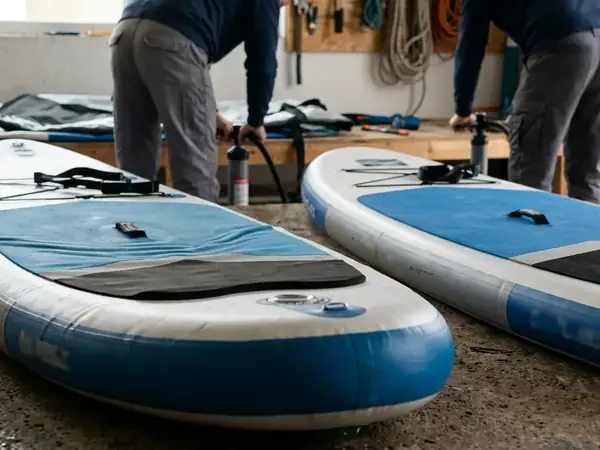
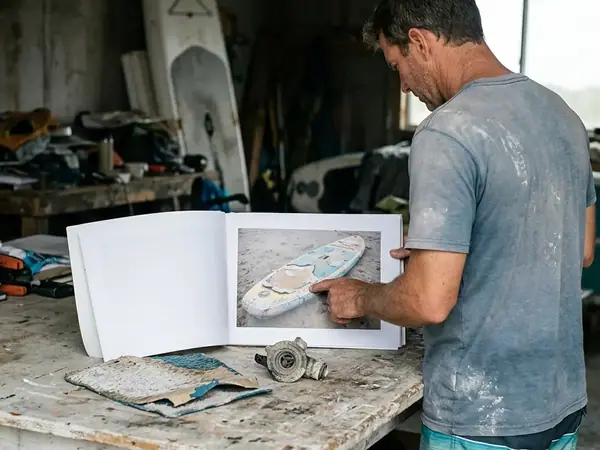
That pair may look like a quiver on the rack, yet it adds little capability on the water. It does add another launch-to-storage workflow: unpacking, inflation, fin installation, inspection, rinsing after salt or mud, complete drying, deflation, rolling, and sorting loose parts back into the correct bag.
Lay out each board with its pump, hose, fin, leash where appropriate, repair kit, bag, and required drying space. Check compatibility item by item. A fin box or valve can look familiar while requiring a different component. In a two-board household, label fins, hoses, and repair materials unless interchangeability has been confirmed.
Pre-trip indecision is another cost. Choosing between two overlapping all-round or touring inflatables consumes attention without changing the planned route. One adaptable hull with removable accessories often makes the launch simpler.
Capability Check
A second board fails to add useful capability when both inflatables serve the same sheltered water, carry nearly identical loads, and differ mainly in category label or minor deck fittings.
What a Versatile iSUP Must Actually Do
Versatility means acceptable performance across recurring conditions, not excellence in every discipline. Start with the most demanding activity that happens regularly, perhaps carrying overnight gear or standing to cast, and work backward toward the least specialized hull that still supports it.
Check Load Before Labels
Calculate the full on-water load: paddler, clothing, water, PFD, paddle, dry bags, fishing equipment, seat or crate, and any companion cargo. Compare that total with the current manufacturer-rated capacity. Rider weight alone leaves too much equipment outside the calculation.
Compare the Working Specifications
- Standing area: Extra width can create a calmer platform for casting or uncertain footing, while increasing paddle reach and wetted area.
- Length: A longer hull can improve glide and tracking. It can also become awkward on tight launch paths, during turns, or when carried in wind.
- Capacity and pressure: Use the manufacturer’s current ratings for the specific board rather than assumptions based on similar-looking inflatable paddleboards.
- Fin system: A replaceable fin system helps adapt tracking and simplifies replacement, provided the required parts remain compatible.
- Deck fittings: Cargo cords and mounts support accessories & rigging, although excessive hardware can clutter the standing zone.
- Transport: Comfortable handles and realistic packed dimensions matter at stairs, narrow paths, vehicle loading points, and airport transfers.
Check six fields side by side: inflated length and width, rated capacity, operating pressure, fin-box type, packed dimensions, and warranty terms. Then place the intended cargo on the deck. A specification sheet will not reveal that a dry bag covers the center handle or that a crate occupies the paddler’s foot position.
Deck-Space Test
Arrange the real load before committing to the setup. Keep the standing area, primary carry handle, paddle path, and access needed for reboarding clear.
When a Second Board Earns Its Rack Space
What limitation remains after the rig has been changed?
A narrow performance hull addresses race acceleration in a way removable cargo cannot. A dedicated surf shape handles waves differently from a flatwater touring outline. Technical river use brings construction, handling, leash, and safety requirements that should never be borrowed automatically from open flatwater. A heavily rigged fishing platform can also conflict directly with frequent airline travel.
A versatile hull can accept different cargo modules, but accessories cannot reproduce a race board’s narrow waterline, a surf board’s wave-oriented shape, or the characteristics selected for technical moving water.
Review the previous 8–12 trips and look for the same observable limitation across multiple relevant outings. Then name the required design change. Borrow or rent the proposed specialist shape for at least two outings when possible: one representative trip and one near the upper end of its intended conditions.
Two overlapping boards may also be practical when partners, family members, students, or guests need to paddle at the same time. Simultaneous use creates real capacity even when the hulls are similar.
Change the Rig, Not the Board
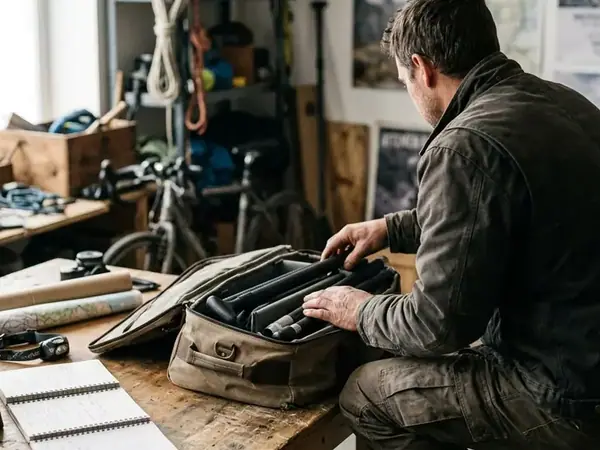
Keep permanent essentials together. The board bag should retain the pump, confirmed fin components, repair materials, and the valve tool specified by the manufacturer. A labeled pouch can hold the correct fin screw or pin, compatible pump adapters, manufacturer-supplied patches, adhesive when its storage instructions permit, and the proper valve tool.
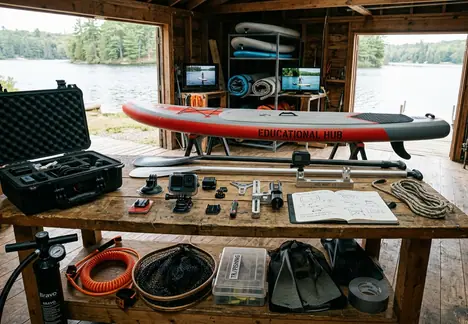
Build Trip Modules
For a short recreational outing, take the board, paddle, appropriate PFD, clothing suited to the water, and a small secured dry bag. Touring may add a compact dry bag beneath the deck bungees. The sup fishing module can add a removable crate and rod holders, then come off again before an ordinary paddle.
This division prevents an inflatable paddleboard from carrying yesterday’s accessories into today’s trip.
Use the Same Preparation Sequence
- Check the forecast during the 12–24 hours before departure.
- On arrival, reassess observed wind, current, water state, and launch access.
- Confirm the combined board and gear load against the manufacturer’s rating.
- Select the compatible fin and cargo arrangement for the planned water.
- Inflate the board to its specified operating pressure and inspect the hull, valve, fin, and attachment points.
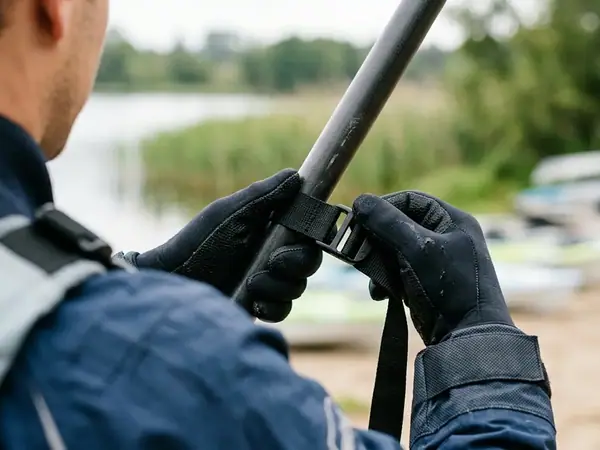
- Secure equipment so it cannot slide into the standing area, block the center handle, interfere with paddle strokes, or obstruct reboarding access.
Choose the leash type and release arrangement for the environment. Gear suited to open flatwater should not transfer automatically to moving or snag-prone water. That decision belongs with the water assessment, not at the bottom of a packed bag.
Prove the Need Before Buying Board Two
Delay the purchase until a short log identifies a repeatable problem. Record 6–10 outings over 4–8 weeks, extending the period when the intended specialist conditions never occur.
For every trip, note the location type, wind and water state, activity, cargo, time afloat, and exact board-related limitation. Use observable language: repeated course correction in side wind, insufficient clear deck space after loading a crate, or difficulty carrying the packed bag through an airport transfer. “Felt basic” does not identify a design requirement.
Ask Three Questions
- What recurring trip can the current board no longer handle well?
- Which specific design difference solves that limitation?
- Will the second board see enough use to justify its storage, drying, component management, and upkeep?
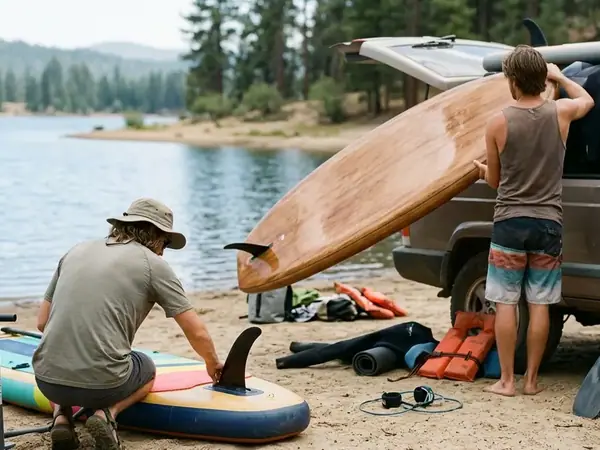
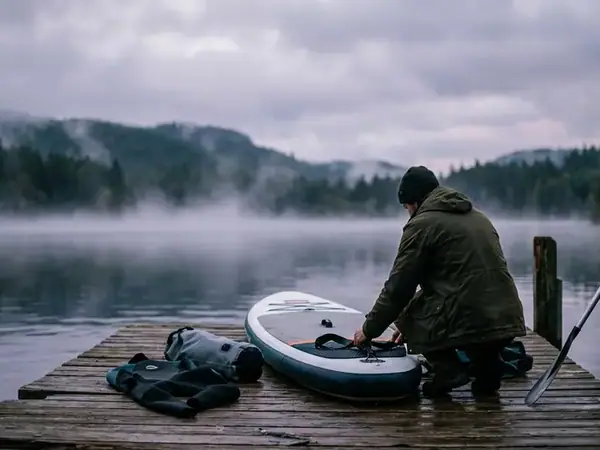
At a gravel lakeside launch just after dawn, a paddler clips a compact dry bag beneath the forward deck cords. The inflated all-round iSUP lifts by its center handle. A few steps later, the board slides onto the sheltered route that once seemed to require a separate touring model.