In this Article
- SUP Safety Starts With Recovery
- When the Board Takes the Safety Gear
- Flotation Has to Travel With the Paddler
- The Leash Decision Changes With the Water
- Read the Wind Beyond the Launch
- Dress for the Water Beneath the Board
- Going Alone Changes the Recovery Plan
- Put Recovery Questions Before the Launch
SUP Safety Starts With Recovery
Paddleboarding has spread beyond surf breaks into lake recreation, river trips and coastal touring. Those settings share a board and paddle, yet wind, current and water temperature create different demands after a fall.
The useful distinction is between entering the water and losing the ability to recover. Falling off starts an immersion event; separation, unavailable flotation, cold exposure or delayed help can turn it into a potential rescue situation.
Balance deserves practice. Recovery deserves equal attention: can the paddler breathe, stay afloat, maintain safe contact with equipment and obtain help? That question connects paddling skills & board fit with the safety decisions made before launch.
When the Board Takes the Safety Gear
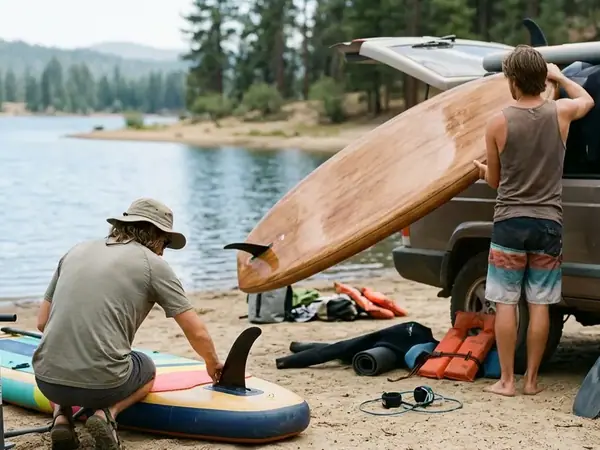
Consider an illustrative sequence. A paddler leaves a sheltered bank on an inflatable stand-up paddleboard, or iSUP. Farther out, offshore wind catches the standing paddler and inflated board. The paddler falls, loses contact and watches the board move away. A PFD and phone tucked beneath the deck bungees go with it.
Cold water disrupts breathing, making the attempt to recover more demanding. Equipment that looked neatly organized at launch has become inaccessible.
Each link suggests a different interruption:
- Separation: select a board connection appropriate to the water.
- Unavailable flotation: wear a properly fitted PFD before departure.
- Cold exposure: choose immersion clothing and practice recovery with support.
- Inaccessible communication: carry suitable waterproof communication on the paddler.
This example traces how problems compound. Preventing a fall addresses the first event; maintaining breathing, flotation and safe equipment contact addresses what happens afterward. The word safe matters: in flowing water, an inappropriate leash can exchange separation for entrapment.
Flotation Has to Travel With the Paddler
Where will the flotation be if the board gets away?
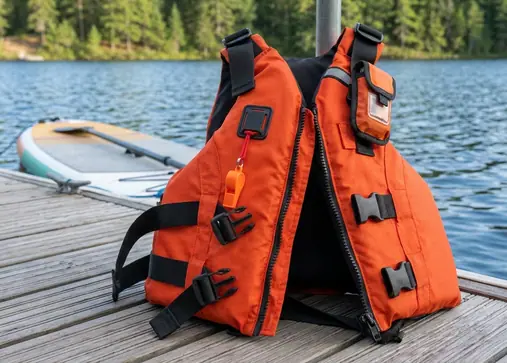
A properly fitted, worn personal flotation device stays with the swimmer. A device secured under deck bungees stays with the board. Make that distinction part of getting dressed at the launch.
- Put the PFD on and fasten every required closure.
- Adjust the straps using the manufacturer's fitting instructions.
- Check for excessive upward movement toward the chin or ears.
- Position a whistle and communication device where they can be reached while floating, avoiding long dangling cords that can snag.
An inherently buoyant PFD supplies buoyancy without inflation. An inflatable device depends on an inflation system and may require manual activation. Check its approval, operating requirements and suitability for the activity and conditions.
Within Floating Reach
Test the communication device inside its waterproof enclosure before departure. Check battery condition, coverage and whether essential controls work through the enclosure.
The practical test reaches beyond owning safety equipment: the paddler needs to reach and operate it from the water.
The Leash Decision Changes With the Water
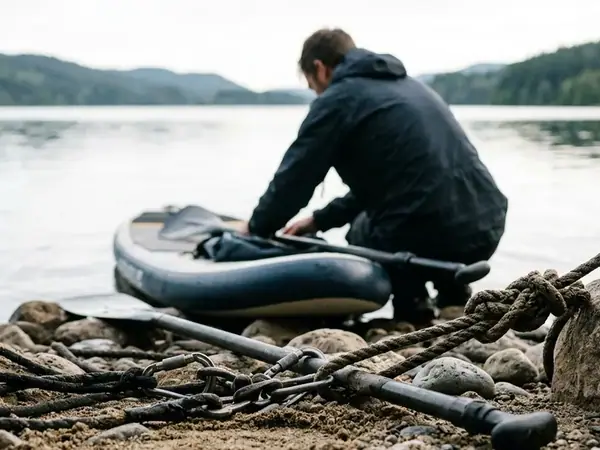
A leash can preserve contact with a board on suitable open water. In moving water, a leash snagged on a branch, rock or other obstruction can hold a paddler in the current.
Choose the arrangement after identifying the environment:
- Sheltered still water: consider separation prevention alongside snag exposure.
- Breaking surf: select equipment for surf loading and recoil hazards with qualified guidance.
- Flowing rivers: assess current and obstructions before selecting a system; moving-water arrangements require a suitable, accessible quick release, compatible components and training.
Keep Ankles Clear
Do not use ankle or calf leashes in flowing water where entrapment is possible. The attachment may become difficult or impossible to reach under load.
Coil shape alone does not resolve release access, attachment-point or entrapment problems. Beginners should choose sheltered water and seek qualified moving-water instruction before progressing to rivers. A release mechanism does not make an obstructed river route suitable.
Read the Wind Beyond the Launch
A launch behind trees can feel calm while the water beyond their shelter is exposed. An easy outward glide may then carry a paddler away from the shoreline needed for the return.
Offshore wind blows from the relevant shoreline toward open water. Both the standing paddler and inflated board present wind exposure. After a fall, the unoccupied board remains exposed.
Plan backward from a usable landing. Check wind direction, forecast changes, current and tidal movement where relevant. Look closely at alternatives: cliffs, breaking waves, access restrictions and changing tides can remove an apparent exit.
Set observable turnaround triggers before departure:
- Comfortable progress toward the landing begins to disappear.
- Chop increases or visibility deteriorates.
- A forecast change arrives earlier than expected.
Kneeling lowers the paddler's profile and can improve stability. Treat it as an adjustment while reassessing the route, rather than a plan for overcoming unsuitable wind or current.
If a safe return becomes doubtful, request help early. Communicate the location and nature of the difficulty, preserve energy and retain contact with the board when safe.
Dress for the Water Beneath the Board
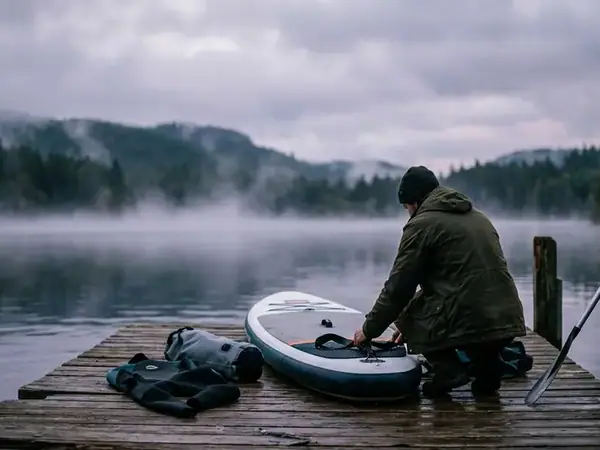
What does a sunny launch tell a paddler about immersion protection? Water temperature, expected exposure and access to rescue provide the useful basis for that decision.
Cold-water immersion can disrupt breathing immediately. Deterioration in useful movement follows a different course, while longer-term body cooling creates further danger. These processes call for preparation before launch and a deliberate response after immersion: prioritize flotation and regaining controlled breathing before strenuous movement.
Wetsuits and drysuits provide different protective systems. A wetsuit uses insulating material and limits water exchange around the body. A drysuit keeps water out through its shell and seals and normally needs suitable insulating layers underneath. Selection, fit and familiarity matter alongside flotation.
Leave Room to Reboard
Practice re-entry in sheltered conditions with appropriate thermal protection and competent support. Use the PFD and deck arrangement intended for the trip.
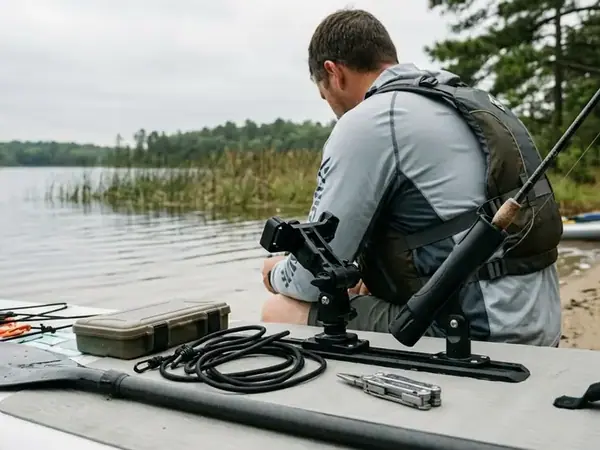
For SUP fishing, this means checking accessories & rigging as part of recovery preparation. Keep the reboarding area clear of crates, loose lines and unsecured tackle. Secure hooks and sharp equipment away from the path a swimmer must pull across.
Once ashore, reach shelter and replace wet clothing with dry insulation when practical. Breathing problems, confusion or persistent severe symptoms warrant emergency assistance.
Going Alone Changes the Recovery Plan
Solo paddling removes immediate backup when re-entry fails, equipment breaks or an injury interrupts the trip. A nearby companion may notice separation or summon help sooner; group plans should still account for each paddler's recovery needs.
Before a solo departure, give a shore contact a usable plan containing:
- The launch point, intended route and planned landing.
- The expected return time and a specific overdue-action time.
- A description of the paddler and board.
- The communication method carried and the appropriate local rescue contact.
- When to attempt contact and when to alert the relevant emergency service.
Keep communication attached to the paddler. Choose a phone, suitable marine radio or appropriate satellite distress equipment for the location, coverage and operating requirements.
Groups also need decisions made ashore: how to maintain visual contact, where to regroup and how to agree on turning back. If the recovery plan remains uncertain, choose an easier route, a capable companion or another day.
Put Recovery Questions Before the Launch
On an exposed lake, wind-driven separation and cold immersion deserve early attention. On a river, current, obstructions and entrapment shape the equipment decision. Coastal routes add tidal movement and changing landing access to the wind assessment.
Use the same launch sequence while changing the emphasis for the setting:
- Choose suitable conditions and exits. Check the return route and usable alternatives.
- Wear flotation and immersion protection. Fit them before leaving shore.
- Select the water-appropriate leash arrangement. Account for separation and entrapment.
- Confirm recovery and communication. Check re-entry capability with the loaded board and access to help from the water.
Before the Push-Off
Can the paddler stay afloat? Is the connection arrangement appropriate to this water? Can they get back aboard with this setup? Can they call for help from the water?
Change the route, equipment or timing when a critical recovery step is unresolved. The reason is visible in a single separation: an inflated paddleboard can be blown away faster than a swimmer can reach it.